








Denver restaurants are trading entrees for small plates.
Since the start of the year, a string of new tapas joints have opened across the city. It started in January when chef Johnny Curiel debuted Mar Bella Wine Bar, his first departure from Mexican cuisine and into the traditions of Northern Spain’s tapas and pintxos. March brought FiNo, a Mediterranean-inspired small plates concept inside the newly opened All Inn Hotel on East Colfax. Then, in May, chef Theo Adley launched Heretik in RiNo, with a tight menu of delightful small plates like uni pan con tomate and tilefish crudo inspired by France’s Côte d’Argent region and Spain’s Basque Country.
Read more Costs to visit Colorado’s natural wonders are adding up
Even beyond Denver city limits, Boulder welcomed Spanish tapas restaurant Casa Juani in March. And more tapas are on the way for the Mile High with the anticipated opening of Wednesday Ellie later this year.
What are tapas?
“If you were to ask me, ‘What is the direct definition of tapas?’ To me, it’s shareable small plates,” said Curiel. “But there are so many stories about where they came from and what a tapa was.”
The word ‘tapas’ itself comes from the Spanish verb tapar, meaning “to cover,” a nod to one popular legend that bartenders placed slices of cured meat or bread atop wine glasses to keep out dust and flies. Another traces the tradition to the 13th century, when King Alfonso X of Castile reportedly made it illegal to serve wine without small bites of food.
Whatever the true origin may be, today, tapas are synonymous with Spain’s dining culture, defined by dishes like patatas bravas (fried potatoes served with salsa brava), croquetas and pan con tomate, eaten in between sips of wine and lively conversation.
“If you go to Spain, people don’t just go out to eat because they need to eat. They go out because they want to have a fun time, they want to be hanging out in a loud environment. They want to be talking and be part of the experience,” Curiel continued.
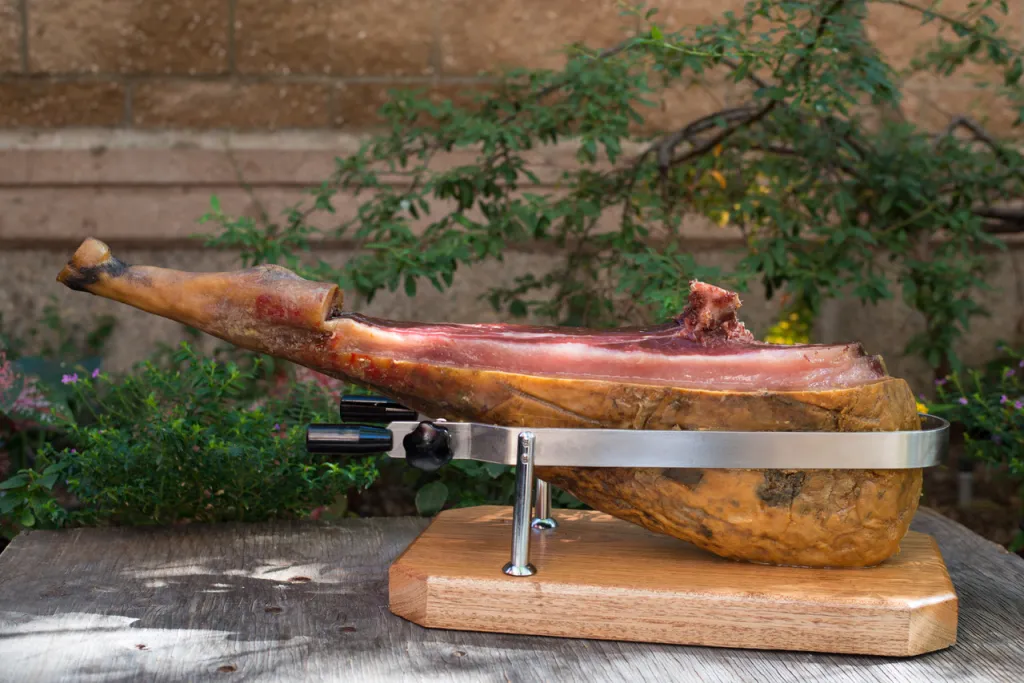
At Mar Bella, Curiel has created a true homage to tapas culture. A slab of Jamón Ibérico hangs behind the bar, a fish dry-aging cabinet sits on display, which he uses to make conservas (preserved seafood), and a roaming gin and tonic cart similar to what you’d find in Basque Country winds its way through the dining room. The menu includes everything from Hokkaido scallop crudo and NY Strip skewers with salsa verde and herb labneh to oxtail-stuffed piquillo peppers.
A Spanish-driven wine list features more than 130 selections, which can be ordered by 3-ounce or 5-ounce pours. According to Curiel, the smaller pours encourage guests to step outside their comfort zones.
“People will almost treat the wine as a pairing,” he shared. “They’ll say, ‘What do you recommend with this?’ and then they’ll get a three-ounce pour of whatever.”
La hora del vermut
While wine and gin are perhaps the most recognizable components of Spain’s tapas culture, another longstanding tradition revolves around “La hora del vermut,” or “Vermouth Hour.” Taking place around noon, Spaniards typically grab a glass and a snack to hold them over before lunch.
At Ultreia, which has been in the tapas game since 2017, executive chef Adam Branz is working to introduce a piece of that culture to Denverites.
“I love vermouth culture, but it is still sort of a developing thing in Denver,” Branz said.
The restaurant invests heavily in Spanish vermouths, which tend to be lighter and brighter than their Italian counterparts, often encouraging guests to sample them before ordering.
“We spend a lot of time and a lot of money sourcing really high-quality Spanish vermouths,” he added. “By doing the work of exposing people to it, giving away sips, they’re enjoying it and coming back for it.”
The same pattern has played out with another Iberian staple: tinned fish.
When Ultreia first added conservas (a Spanish word for packaged items that often refers to tinned fish) to the menu around 2019, Branz was thrilled to sell a couple of tins per night. Today, customers arrive specifically looking for them.
“People know what it is, are excited about it, and actively look for their favorite brand,” Branz said. “We sell a crazy amount of tinned fish at this point.”
The restaurant currently offers an exclusive lineup from Fishwife, with the salmon with chili crisp and any sort of trout being among the most popular.
While Ultreia has been serving Spanish and Portuguese cuisine at Union Station for nearly a decade, it didn’t begin as the tapas-focused restaurant it is today. At first, the menu included a larger mix of raciones — heartier, entree-sized dishes common in Spain — alongside smaller tapas and petiscos (the Portuguese counterpart to Spanish tapas). Over time, however, Branz noticed diners gravitating toward the smaller plates.
“The customers told us what they wanted,” Branz said. “We saw more popularity there.”
Part of the appeal, Branz believes, is the flexibility. Rather than waiting for an entire table’s order to be prepared, dishes arrive as they’re ready, creating a more spontaneous and organic dining experience.
Denver-style tapas
“People are constantly talking, eating and drinking,” chef Steven Waters said of the experience at his new eatery, FiNo. “It’s not this structured dance of everybody gets an appetizer at once.”
Like Curiel and Branz, Waters sees the trend as a reflection of changing consumer preferences.
“People want things that are a little less formal and more approachable and fun and light and lively,” he said. “That style of food really encourages that.”
His menu is also less formal than the more traditional offerings at Mar Bella and Ultreia. It takes liberties with the concept and inspirations from across the Mediterranean with offerings like Medi Nachos (kettle chips loaded with prosciutto, garlic toum, herbed tonnato and reggiano), chicken wings tossed in Calabrian chili and stuffed with blue cheese, charred cabbage in brown butter with capers, and grilled sourdough topped with Dungeness crab and avocado.
“We don’t want to be just Spanish,” Waters said. “Let’s take the style of eating of very small plates, lots of sharing, snacks that go along with drinking, and expand that to the whole Mediterranean region.”
Like Mar Bella, FiNo also offers half pours of wine so customers can sample as they go, but similar to their food menu, the bar drifts away from tradition with creative concoctions like the Marscapone Ramos — FiNo’s take on a Ramos Gin Fizz made with prickly pear gin, Sardinian myrtle berry, lemon, and topped with a mascarpone foam — and a Dirty FiNo martini with grey goose, cornichon gin and pickled tomato water brine.
The result is a uniquely Denver-style tapas menu akin to elevated munchies snacks that borrows freely from multiple culinary traditions.
To tapa or not to tapa
One of the most common criticisms of tapas restaurants is that diners end up ordering more dishes and spending more money without necessarily leaving any fuller. While they may order significantly more dishes than they would at a traditional restaurant, the overall spend tends to be pretty similar, according to the chefs we spoke with.
At FiNo, Waters said guests order an average of about three dishes per person. Branz estimates a typical two-top at Ultreia shares about eight dishes, while Curiel said a table of two orders five to six plates at Mar Bella.
When compared against menu prices, those ordering patterns generally place diners in the same range as a traditional appetizer-entree-dessert meal at a similarly priced restaurant.
At FiNo, the small plates range from $7-$25. At an average of $17, if most customers order three each, that’s around $50 a person before drinks. At Ultreia, where small plates average about $12 and meat and cheese boards and tinned fish cost around $25 each, a meal consisting of three tapas each and a shared board comes out to roughly $50 per person. And at Mar Bella, which is notably an upscale restaurant, if a table of two orders around 5.5 plates, where the average dish is around $25, that comes out to around $69 per person.
Ultimately, the difference in dining styles seems to be less about cost than perception. Rather than spending $60 on a single entree, appetizer and dessert, diners may spend the same amount across several dishes, allowing them to sample more of a chef’s menu.
“If I’m going out with [my wife] Casey and two friends, we’re going to order a bottle of wine and sit on the patio. We don’t want to be rushed,” said Curiel. “I think that is the way the guest wants to eat now. They want to go in and try as much as they can that the chef has created.”
Subscribe to our new food newsletter, Stuffed, to get Denver food and drink news sent straight to your inbox.
Read more Colorado wildfires destroy more than 100 structures, force more evacuations