



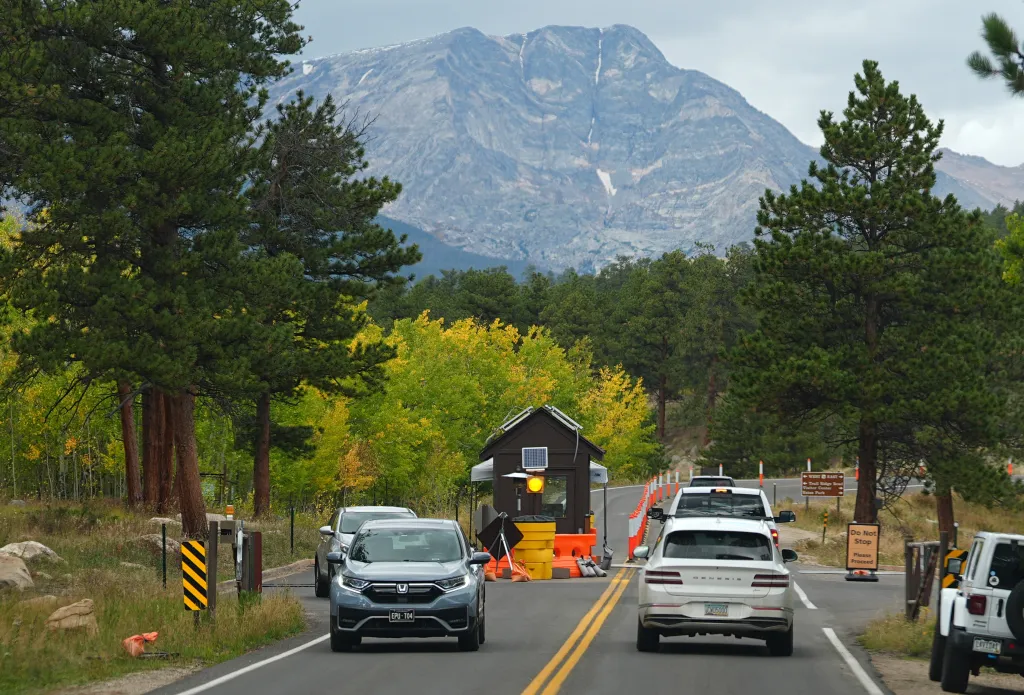
There are plenty of places in Colorado’s wilderness where locals can enjoy the scenery for free. But those looking to check out the state’s most popular natural destinations may have to start building it into their budgets.
The costs associated with entry fees and reservation times can add up quickly between the numerous national parks, national forests, state parks and more. It can also be difficult to keep up with it all since each attraction is managed by a different agency or municipality.
Say, for example, you live in Denver and have friends or family visiting for a long weekend. If you want to take them kayaking at Chatfield State Park in Littleton one day, you’ll need to buy a $12 vehicle day pass. And if you also want to drive them to the summit of Mount Blue Sky near Idaho Springs, you’ll need to make a reservation up to 30 days in advance and pay another $22 reservation/entry fee for the day.
That’s a $34 investment before you consider the added costs of gas, food, and gear rentals.
Or perhaps your group wants to venture further into the forest and check out the iconic Hanging Lake in Glenwood Springs followed by a trip to Maroon Bells Scenic Area near Aspen. That will set you back $12 per person for hiking access to Hanging Lake, plus $12.50 to park at the Maroon Bells trailhead. The catch: Maroon Bells’ parking reservations fill up quickly, so unless you book well in advance, you’ll likely have to take a shuttle to the scenic area for $16 per adult and $10 per child.
The cheapest way to get into Maroon Bells Scenic Area is to ride an e-bike, which incurs a $5 entry fee — though that does not include whatever it may cost to rent one from a nearby shop. Plus, you need some level of physical fitness, as the ride is about 16.2 miles round trip from Aspen Highlands Ski Area to Maroon Lake.
Fees to access these beloved areas often go back to helping crews maintain and clean the trails and amenities, so they are not cash grabs. And there are some money-saving hacks to bring down the cost. For example, when Coloradans register their vehicles each year, they can get a Keep Colorado Wild state parks pass for $29, a steep discount compared to the usual price of $80. Local libraries also lend out passes to state parks.
Still, it’s easy to spend hundreds of dollars per year to visit Colorado’s most coveted outdoor destinations. Here’s a breakdown of prices to know about ahead of planning your next trip.
National Parks Annual Pass: $80
If you plan to visit all four of Colorado’s national parks, or even a single park more than twice, it’s probably worth investing in an annual pass. Otherwise, you’ll pay $30 per car to visit Rocky Mountain National Park, Mesa Verde National Park and Black Canyon of the Gunnison National Park, and $25 per car to visit the Great Sand Dunes National Park and Preserve. Individual parks also sell individual annual passes for less than $80. For example, an annual pass to Black Canyon of the Gunnison National Park costs $55.
State Parks Annual Pass: $80
As mentioned, Colorado residents can snag a discounted state parks pass when they sign up for a $29 Keep Colorado Wild Pass during vehicle registration. That is the only time locals can access that discount. About a quarter of the population opted in for that pass between June 2024 and June 2025, generating $41 million to support state parks, local search and rescue volunteers and the Colorado Avalanche Information Center, according to the Colorado Department of Transportation.
Read more Colorado wildfires destroy more than 100 structures, force more evacuations
State Parks Day Pass: $10-$12
Day use passes to Colorado’s state parks typically cost $10 per private vehicle. However, several parks increased entry prices by $2 this year to support maintenance of roads and dams. It costs $12 to visit Chatfield State Park in Littleton, Cherry Creek State Park in Aurora, Golden Gate Canyon in Golden, Elkhead Reservoir State Park in Craig, Stagecoach State Park in Oak Creek, State Forest State Park in Walden, and Pearl Lake State Park and Steamboat Lake State Park in Clark. (Out-of-state visitors pay $15-$17 per day depending on where they go.)
Mount Blue Sky: $17-$22
Following a multi-year closure and redevelopment project, the Mount Blue Sky Recreation Area reopened to visitors in May of this year. Entry costs $20 per car or $15 per motorcycle, plus a $2 reservation fee to schedule when you want to visit in advance (required). The recreation area officially starts near Echo Lake on the Mount Blue Sky Scenic Byway, and includes access to Mount Goliath, Summit Lake Park, and the Mount Blue Sky Summit at 14,266 feet.
Pikes Peak: $20-$40 per person
Located near Colorado Springs, Pikes Peak is one of Colorado’s most accessible 14ers because there is a paved highway that runs 19 miles all the way to the summit. But, of course, it will cost you to get there. Entry costs $18 per person in a private vehicle (or $65 for a car of up to five people), plus a $2 reservation fee when booked in advance. Another option is to ride the shuttle to the top, which costs $40 per adult and $12 per child.
Hanging Lake: $12 per person
Much of the trail to Hanging Lake, near Glenwood Springs, was destroyed in a wildfire that ripped through the area in 2020. Though it has technically been open since 2021, a $4.7 million reconstruction project is now complete and welcoming visitors. Reservations ($12 per person) are required to visit Hanging Lake, a Natural National Landmark formed from travertine, or limestone deposited near mineral springs. The lake was formed by a geologic fault that caused the lake bed to drop away from the valley floor above, and it remains home to an extremely sensitive ecosystem.
Maroon Bells Scenic Area: $5 and up
The Maroon Bells Scenic Area provides access to Maroon Lake and acts as a gateway to the larger Maroon Bells-Snowmass Wilderness. It costs $12.50 ($10, plus a $2 reservation fee) to park at the trailhead. But parking sells out far in advance, so visitors may have to take a shuttle service that runs from Aspen Highlands Ski Area to the Maroon Lake trailhead. That costs $16 per adult and $10 per child when booked in advance, or $20 per adult and $14 per child when booked day-of. New this year, the area is charging $5 per e-bike entry.
Maroon Bells ranks among Colorado’s most well-known destinations, recording about 215,000 visits annually between May and October. That’s why fees are expected to go up in the coming years, as Pitkin County officials work to take over maintaining the recreation area.
Blue Lakes: $6-$31 starting in 2027
Anyone who wants to visit the Blue Lakes, located near Ridgway and Telluride on the Western Slope, will soon have to buy a permit to do so. Starting in 2027, the U.S. Forest Service expects to require people to buy a $5 day-use permit or $25 overnight camping permit during peak season, from June 1 through Sept. 30. The prices are anticipated to include an additional $1 and $6 reservation fee, respectively. (The agency recently proposed those fees and is currently soliciting public feedback.)
The Blue Lakes have become extremely popular in recent years to the point that recreation has devastated the natural wilderness. The permit system is intended to cut down annual visitation from about 35,000 people to 8,000 people.
Subscribe to our weekly newsletter, The Adventurist, to get outdoors news sent straight to your inbox.
Read more Today in History: July 1, British rule of Hong Kong ends