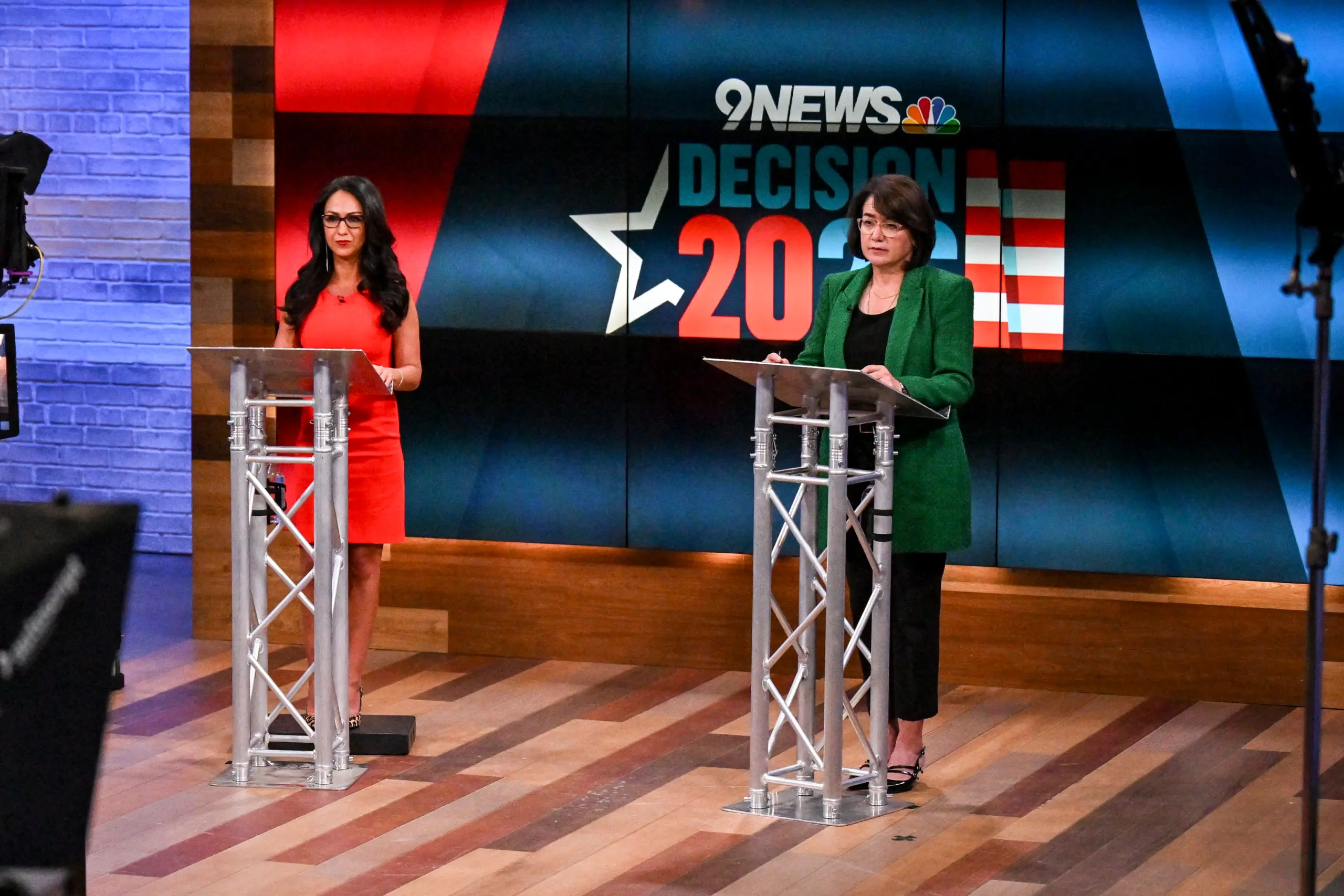








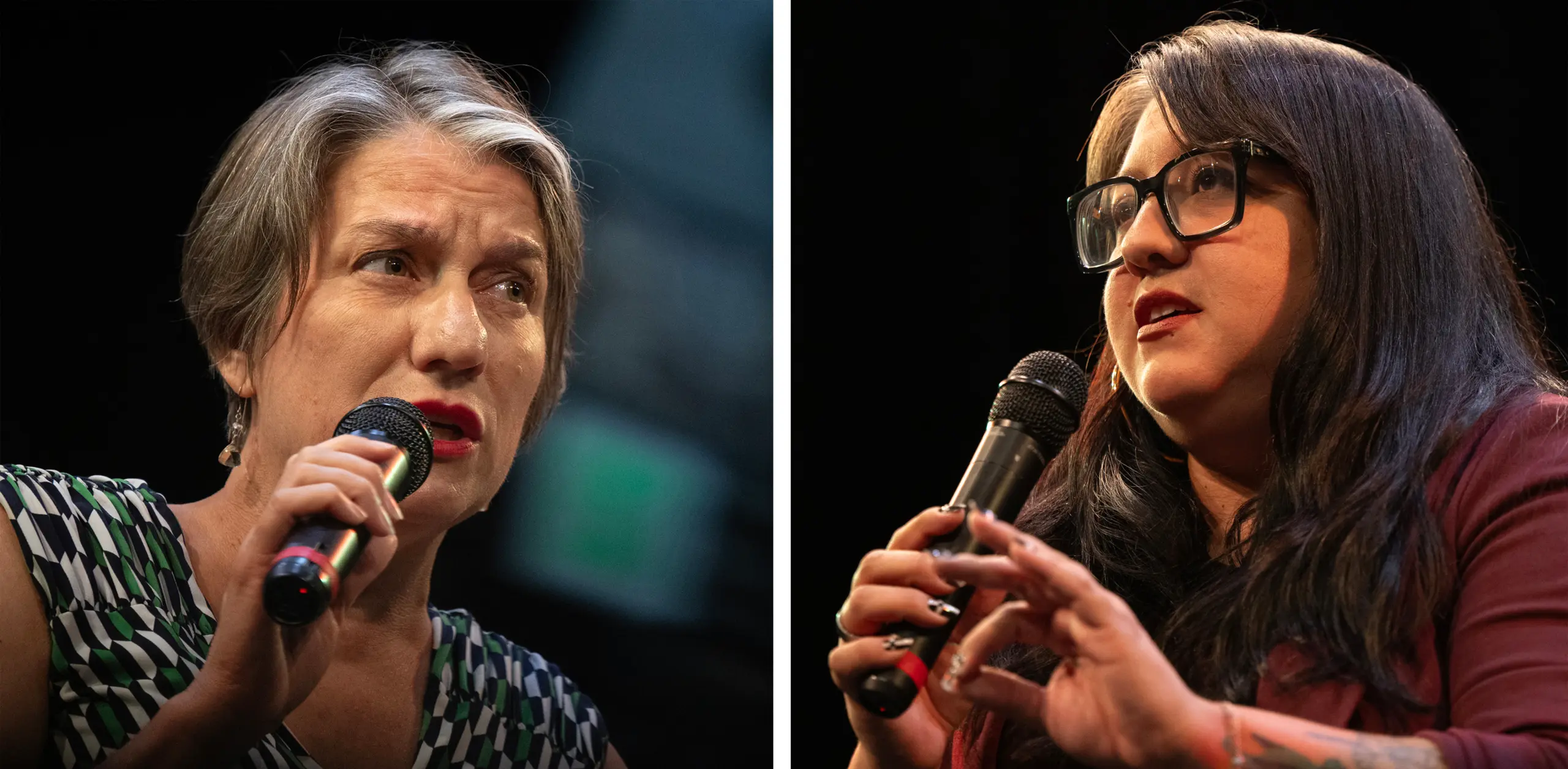
Denver City Council candidates Monica Martinez and Melissa Mejía have a few things in common.
Read more Jenna Ylivainio steps in to set attack for CU Buffs volleyball
The Denver women have both worked for local nonprofits. They both value affordability, reliable government and finding ways to prevent displacement of neighborhoods’ longtime residents. They’re also both favorites in the crowded election to take over a vacant at-large council seat this November.
But most of all — and most problematic for their campaigns — their names sound somewhat similar. Both have the initials M.M., and both are Latina. The candidates say that overlap has been causing mix-ups.
“I’m so excited to support Monica Mejía!” said one confused voter, according to Martinez.
It’s a concern that has been top of mind since the start of the campaign, Mejía said.
“I’m honestly surprised this is the first time someone has brought it up in a more public way,” Mejía said. “I need to make sure that I stand out, that people know who I am … which you always want to do — but (now) just knowing there was sort of this extra layer of challenge to it.”
Councilwoman Jamie Torres, who once employed Mejía but is endorsing Martinez in the 10-candidate race, chuckled when asked about voters mixing the two up.
“Denver needs to be challenged with the reality that Latinas are running for and in every space,” she said. “You don’t have to just remember one of them.”
Even a relatively small number of people getting the names confused could have an impact on the race. Unlike a regular council election, the race won’t have a runoff — so whoever wins the most votes in the Nov. 3 election, even if it’s only a slim plurality, will win the position. The new council member will be one of two on the 13-seat council who represent the entire city.
The seat, which is vacant after former Councilwoman Sarah Parady resigned in August, will be up for election again in the spring, as part of the standard council election schedule.
Election leaders
Beyond their small similarities, the two candidates have plenty of differences. That’s especially clear when it comes to how they would vote if elected to the council.
Mejía, a self-described progressive and member of the Denver chapter of the Democratic Socialists of America, has championed workers’ and renters’ rights throughout her campaign. Martinez is also a lifelong Democrat and says she’s progressive in certain ways, but she’s “more circumspect” about some of the DSA’s policies, saying the group’s ideas “don’t actually serve the purposes of greater affordability.”
The two have emerged as front-runners in the race in both campaign finances and endorsements. Eight other candidates qualified for the ballot: Alfredo Reyes, Jeff Walker, Gabriel Konkle, Raymon Doane, Cynthia Diaz, Julissa Soto, Jake Browne and Whitney Traylor.
Martinez, who is the executive director of the Fax Partnership, an advocacy group for residents and businesses along East Colfax Avenue, carries a major lead over the other candidates in campaign fundraising, with $291,000 total to support her bid, as of Wednesday. That includes about $209,000 in disbursements from the city’s Fair Elections Fund, which matches donations of up to $50 from Denver residents at a 9-to-1 ratio.
Her campaign has matched donations from 500 Denver residents, according to the clerk’s office, which doled out the final donation-matching checks on Wednesday.
Martinez has won endorsements from three current council members, 17 former council members, two former mayors — Wellington Webb and Michael Hancock — as well as Denver District Attorney John Walsh and U.S. Sen. Michael Bennet.
Mejía, a housing policy strategist and consultant, has the second-largest bank account in the race with about $99,500 in support, including $79,600 from the Fair Elections Fund as of Wednesday. The fund matched 219 Denver donations to Mejía.
Read more Nightmare flights and no vouchers: These disruptions now deemed out of airline’s control
Mejía has also garnered high-profile endorsements, including from the Denver Democrats, four local unions, one current council member, Denver Auditor Tim O’Brien and Democratic congressional nominee Melat Kiros, who defeated U.S. Rep. Diana DeGette in the June primary.
Three other candidates have also benefited from the Fair Elections Fund, which has distributed $454,000 total in the race. Alfredo Reyes, a nonprofit executive, has received $67,000, with matches for 182 donors. Whitney Traylor, an attorney, has received $61,000, with matching contributions for 185 people. Jake Browne, a marketing director, has received $37,400, with matching dollars for 149 Denverites.
Diverging views on tipped wages, cameras
Martinez and Mejía both say they have similar values when it comes to their concerns in the city, but they have different approaches for how to address them. One issue that’s emblematic of that divide is the question of whether the city should change the rules for tipped wages.
That complex policy determines how much of tipped workers’ paychecks — like those of servers and baristas — should come from the business they work for versus from the tips they collect. Businesses with tipped workers are already allowed to pay a rate that’s a few dollars less than the general minimum wage through what’s called the “tipped credit.”
Denver City Council At-Large vacancy candidate Q&A
If a worker doesn’t make at least minimum wage with the help of tips, the business must fill in the gap itself.
Some restaurants have argued that the tipped credit should increase, allowing them to pay less of the minimum wage and giving them some financial breathing room. But labor unions have strongly opposed the idea because it would effectively cut workers’ take-home pay. The debate has taken place as Denver’s minimum wage has risen with inflation each year; it’s now $19.29 per hour, before the $3.02 tipped credit is applied, and is set to rise to $19.84 at the start of 2027.
Martinez has said she’s interested in forming a task force to examine whether there’s any action the city should take to alleviate the strain on businesses, which she said has led to fewer restaurant jobs in the city.
Mejía said she doesn’t see that task force as a good use of time and wouldn’t support any proposal that would ultimately decrease workers’ take-home pay. She said she would support a conversation about how to help restaurants in other ways.
Another example of their differences is in how they think about the city’s license-plate reading cameras. Meijia has said she wouldn’t support renewing any surveillance contracts, including the city’s current deal with Axon Enterprise, which provides the cameras.
Martinez, on the other hand, told The Denver Post that if data shows that the cameras are a deterrent to crime and that restrictions protect civil liberties and privacy, she would consider extending the deal.
Election Day draws near
The name mixups seem to be decreasing as Election Day draws closer, Mejía and Martinez say.
“In the early part of the race, I heard this quite a bit,” Martinez said. “But since then, by getting out our message, I haven’t been experiencing that of late.”
Another thing that has helped is that the two have appeared at several events at the same time, Mejía said.
One way that Martinez has tried to ensure voters don’t get her confused is by emphasizing that she appears as the ninth name on the ballot. Mejía appears seventh.
“There are a lot of things to worry about with 10 people on the ballot. This is just one other thing that’s on my mind,” Mejía said. “At least we’re not right next to each other.”
Stay up-to-date with Colorado Politics by signing up for our weekly newsletter, The Spot.
Read more Offensive line paving way for CSU Rams successful ground attack, quarterback protection