









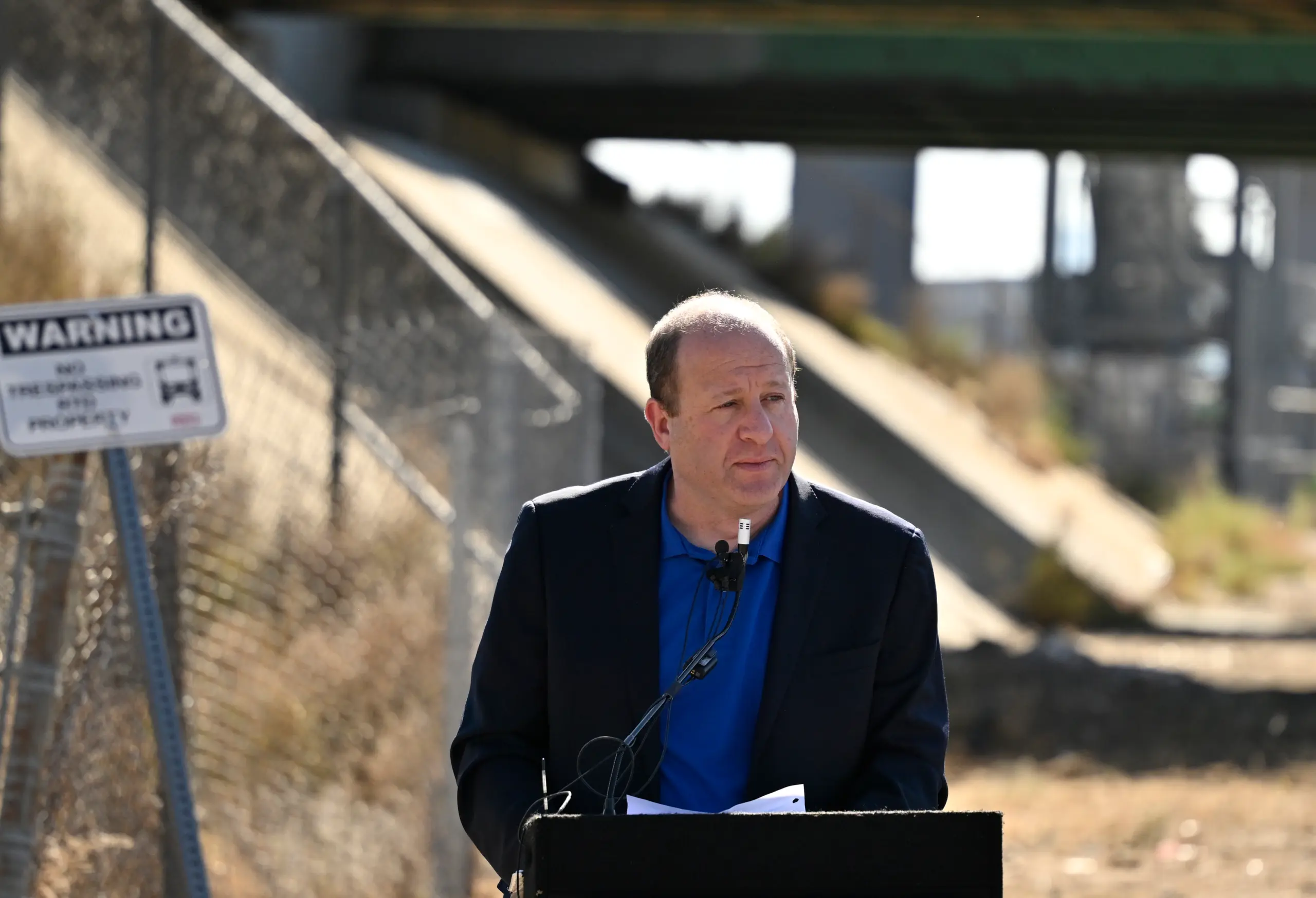
Gov. Jared Polis would likely stand to avoid a big income tax increase if Amendment 87 fails this November — but even as he serves as one of the measure’s most prominent opponents, he hasn’t disclosed just how much he’d save.
Read more As he runs for a final term, Sen. John Hickenlooper says Colorado voters are angry and want change
Polis, a Democrat who’s set to leave office in January, has a net worth estimated in the hundreds of millions of dollars and has been a longtime crusader against income taxes generally. That stance has extended to Amendment 87, a ballot proposal that would end Colorado’s flat income tax and replace it with a tiered structure. It would cut tax rates for low-income Coloradans while hiking them substantially for the very wealthy.
Polis’ opposition has featured in campaign ads against the measure, and he’s appeared on op-ed pages, podcasts and television, where he’s lambasted the proposal as “dangerous.”
In an interview with Denver7, he agreed the wealthy in general should pay more taxes, including himself. The effect of higher tax rates on businesses is what drives his opposition, he said.
Amendment 87, if adopted by voters this November, would institute a graduated state income tax. Under the proposal, the first $500,000 a person or business earns would be taxed at or below the current 4.4% income tax rate. Money earned above that threshold would be taxed at a higher rate — 7.4% for the next $500,001 to $750,000, 7.9% for income between $750,001 and $1 million, and 8.4% on every dollar earned above $1 million.
The net effect would be an increase in state tax revenue estimated at $2 billion in the first year, and more after that, with the money going to K-12 and early childhood education as well as childcare programs. Amendment 87 is championed by the Bell Policy Center, the Colorado Fiscal Institute, Great Education Colorado and other progressive groups.
In leading the opposition, which also includes conservative and business groups, Polis has omitted just how much he personally would benefit if Amendment 87 were to fail.
Asked directly by The Denver Post, a spokesperson for Polis would not say how much taxable income Polis reported in 2025, the most recent tax year.
He does file a personal financial disclosure, a legally required document that is the only public accounting Polis has made of his income for last year. A tally shows a gross income of between about $4.5 million and $8.8 million, either to Polis directly or through holding companies he owns. That includes reported income of between $250,000 and $499,000 from a source that was redacted from the disclosure.
Eric Maruyama said the governor’s personal financial disclosure “does not reflect taxable income.”
“The PFD requires tax exempt income to be reported, and it does not take into account any losses in the current year or carryovers from prior years,” Maruyama wrote in an email.
Read more White House says Melania Trump helped forge a ceasefire deal in a Russian-occupied Ukrainian city
How the ballot proposal to overhaul Colorado taxes could change your tax bill — and who pays more
But if that income on his PFD were to all be taxable, Polis would owe between about $155,000 and $330,000 more in state income taxes if Amendment 87 were to pass — sums that are substantially higher than the median household income for the state. Such an increase would represent a tax hike of about 80% compared to what would be owed under the current tax rate.
Polis did release a tax return for a single year during his 2022 reelection bid. In 2021, Polis and his husband, Marlon Reis, reported more than $1 million in revenue and $315,000 in losses on their joint Form 1040, for a gross income of about $733,000. They claimed an additional $148,700 in deductions, for a total taxable income of $585,151.
If that were still his taxable income under Amendment 87, he would owe an additional $2,200 compared to current rates.
In response to the request for his 2025 taxable income, Polis reiterated that “wealthy people who make more should pay more.”
“Unfortunately, Amendment 87 is not the way to accomplish that. It has far too many unintended consequences, and it gives politicians a $2.7 billion blank check while crushing employers and jobs,” Polis said in the statement. “I have consistently supported closing down the loopholes that benefit only a few, making our tax code fairer and more progressive. Amendment 87 doesn’t close a single loophole and is a massive billions-of-dollars tax hike that would destroy our economy and harm homegrown Colorado companies.”
He added: “Amendment 87 largely forces Colorado small and medium businesses to pay more. I am opposed to this dangerous amendment in order to protect the jobs and paychecks of Coloradans.”
Polis, who sold an e-greeting card company for $780 million in 1999, has historically avoided paying taxes using what legal means were available to him. A ProPublica investigation published in 2021 found Polis paid no federal income taxes in 2013, 2014 and 2015. He paid an overall federal tax rate of 8.2% between 2010 and 2018.
Stay up-to-date with Colorado Politics by signing up for our weekly newsletter, The Spot.
Read more Trump administration sues to block possible Democratic win in Alaska Senate race