








In June, U.S. Sen. John Hickenlooper came closer to slipping beneath an anti-establishment tide than many in the state’s political class had expected.
Read more White House says Melania Trump helped forge a ceasefire deal in a Russian-occupied Ukrainian city
State Sen. Julie Gonzales, a progressive Denver lawmaker who’d raised a fraction of Hickenlooper’s war chest, came within 6 percentage points of unseating one of Colorado’s most prominent political figures in the Democratic primary. It was not Hickenlooper’s closest race, but as he sought one final term in office, it showed how much the state — and the Democratic Party — had moved in the 23 years since he was first elected mayor of Denver, and how ready voters were to embrace an alternative.
“We worked really hard in the primary; we didn’t take anything for granted,” Hickenlooper, 74, said an interview earlier this month. But the race showed that “there are so many people that are bitter and unhappy. It’s not just Democrats. They want change.”
In the Nov. 3 general election, voters will have more Hickenlooper alternatives to consider — most prominently in the form of Republican state Sen. Mark Baisley, a Woodland Park conservative, and Bob Chew, a largely self-funding independent from Boulder who’s running under the banner of the Forward Party.
Hickenlooper, who said he’s ready to spend more time with his family — including a younger son, Jack, who’s nearly 4 — is seeking a second and final term in office. But his two main opponents hope to send him into retirement six years early by riding the same wave that propelled Gonzales.
“I understand that John Hickenlooper is the biggest name in politics in Colorado,” said Baisley, 71, in early October. He’d initially run for governor in a crowded field at the urging of tech companies but changed his mind, in part, after Gonzales announced her campaign last year; no other Republican of any status had declared for the Senate race, either. “So people are either going to vote for John Hickenlooper or they’re going to look for an alternative. My goal over the next 27 days is to present that option for everyone.”
Still, while an under-resourced Gonzales posed a surprisingly serious threat to Hickenlooper earlier this year, Baisley and Chew, a retired businessman, face far steeper odds in solid-blue Colorado.
Gonzales challenged Hickenlooper from the Democratic Party’s progressive — and energized — wing, amid a broader surge in Democratic enthusiasm and anti-incumbent feelings this year. But there’s little reason to believe those same voters would line up behind Baisley, a Trump-friendly conservative, or Chew, who has even less of a public profile and whose primary concern is the national debt.
Neither opponent is criticizing Hickenlooper from the left, as Gonzales did. What’s more, Hickenlooper has raked in millions of dollars in donations and boasts strong name recognition. He’s a vocal critic of President Donald Trump, and the force of his own political standing — coupled with a lack of dramatic scandals — presents an immediate barrier.
Republican makes few waves
More broadly, Colorado is not the senatorial battleground it once was. Hickenlooper unseated then-U.S. Sen. Cory Gardner by more than 9 percentage points in 2020. Gardner was the last GOP official in major statewide office here, and no other Republican has come close since.
Indeed, in 2022, U.S. Rep. Michael Bennet defied conservatives’ hopes for a red wave and smashed his well-financed Republican opponent by double digits.
Both the 2022 and 2024 races attracted millions of dollars in spending. In contrast, Baisley, who ran unopposed in the GOP primary, entered October with less than $28,000 cash on hand; his most recent filings showed he’d raised no money in recent months. His campaign said that was an error that would be corrected, but no additional information had been filed as of Friday.
While Senate Republicans have poured money into contests elsewhere to protect their majority, no outside cash has come to Baisley’s aid.
Colorado U.S. Senate candidate Q&A
In an interview, the Republican lawmaker criticized Hickenlooper for focusing too much on Trump and not enough on Colorado. Though Baisley said he would not be the president’s “sycophant” and criticized Trump’s efforts to import foreign beef, he also defended many of the president’s most polarizing policies.
Regarding this year’s Iran war, Baisley said the Iranians deserved to be put in their place, and he criticized Congress for not “having the balls” to formally declare a war against anyone since World War II. He also supports continued military funding for Israel, says he trusts Trump’s decision to buy diesel fuel from Russia and wants anyone who’s in the country without proper legal status to be deported.
Referring to two fatal shootings of protesters by federal agents in Minneapolis in January, he acknowledged that there had been “hiccups” in Trump’s mass-deportation agenda that could’ve been avoided. He said he was glad there had been fewer shootings of late.
But he also said the people slain weren’t blameless.
“It has been the height of stupidity for protesters to get between a lawful law enforcement action, when they’re trying to get between them and the person that law enforcement is trying to arrest,” Baisley said. “What a bad idea.”
That characterization is at odds with some aspects of the deadly incidents, which were recorded on video. In the first, Renée Good was killed by a U.S. Immigration and Customs Enforcement officer as she tried to drive her car away from agents.
Read more Trump administration sues to block possible Democratic win in Alaska Senate race
In the second, Alex Pretti was filming federal agents when he tried to help a woman whom federal agents had pushed to the ground. He was then surrounded, beaten and shot to death while on his hands and knees. A nurse, Pretti was legally carrying a firearm and had been disarmed just before he was killed by a Border Patrol agent. Both Pretti and Good had ties to Colorado.
‘I’m trying to be that serious third option’
Chew, 67, a former Republican who has donated to GOP candidates in the past, was more critical of Trump’s immigration agenda.
He’d left the party in part because of the president and the Jan. 6, 2021, attack on the U.S. Capitol by Trump supporters. He is almost entirely self-funded, spending a considerable amount in real dollars — $2.8 million, with plans to increase that by as much as $900,000 more. But it’s a paltry sum against the nearly $11 million Hickenlooper has spent this cycle.
“The parties are broken. And sooner or later, something’s gotta give,” Chew said.
He said he never voted for Trump, opposed the president’s election denialism and wanted to serve as a Sen. Joe Manchin-type figure — in the mode of the West Virginia moderate Democrat who forced concessions in the Senate on spending and other issues. Even if he doesn’t win, Chew hopes to raise enough awareness of the national debt — which has surpassed $40 trillion — to force congressional action on it.
“When I go to these county fairs and similar party events, they are all-in if there was a serious third option,” Chew said. “And I’m trying to be that serious third option.”
Both Baisley and Chew said their paths to beating Hickenlooper ran through unaffiliated voters and a belief that those Coloradans were independent, not just unaffiliated.
But in practice, unaffiliated voters in Colorado — who make up half of the electorate — still often vote along partisan lines. And in the Trump era, Democrats have largely won them, without an upswell of support for independent candidates or third parties.
Paul Teske, a veteran political observer and professor at the University of Colorado Denver’s School of Public Affairs, said all of the political energy this year is behind Democratic and progressive causes — not Republicans. Hickenlooper has continued to raise money, participate in debates and release campaign ads — perhaps a sign, Teske said, that the primary “woke him up.”
“The challenge was from the left, and the democratic socialists and the progressives doing better all around in the primary on the Democratic side,” Teske said, adding that he expected Chew to take more votes from Baisley than from Hickenlooper. “It’s just hard to see on the Republican or conservative side where the energy is coming from. And if there’s no money for Baisley — what does he have going for him?”
In an interview, Hickenlooper called for investigations into Trump’s allegedly retaliatory conduct against the state since he returned to office last year. He said a Democratic-majority House and Senate could gut funding for Trump priorities, like the war, and force reforms within ICE.
He said he was “less enamored” with impeaching Trump again but said Democrats’ control of the federal purse strings could help bring the president to heel.
“We learned our lesson: We turned Trump into a victim, a martyr,” he said of the two impeachments resulting from Trump’s first term. Instead, he continued, “we (should) just cut off all this oxygen, take away all his funding.”
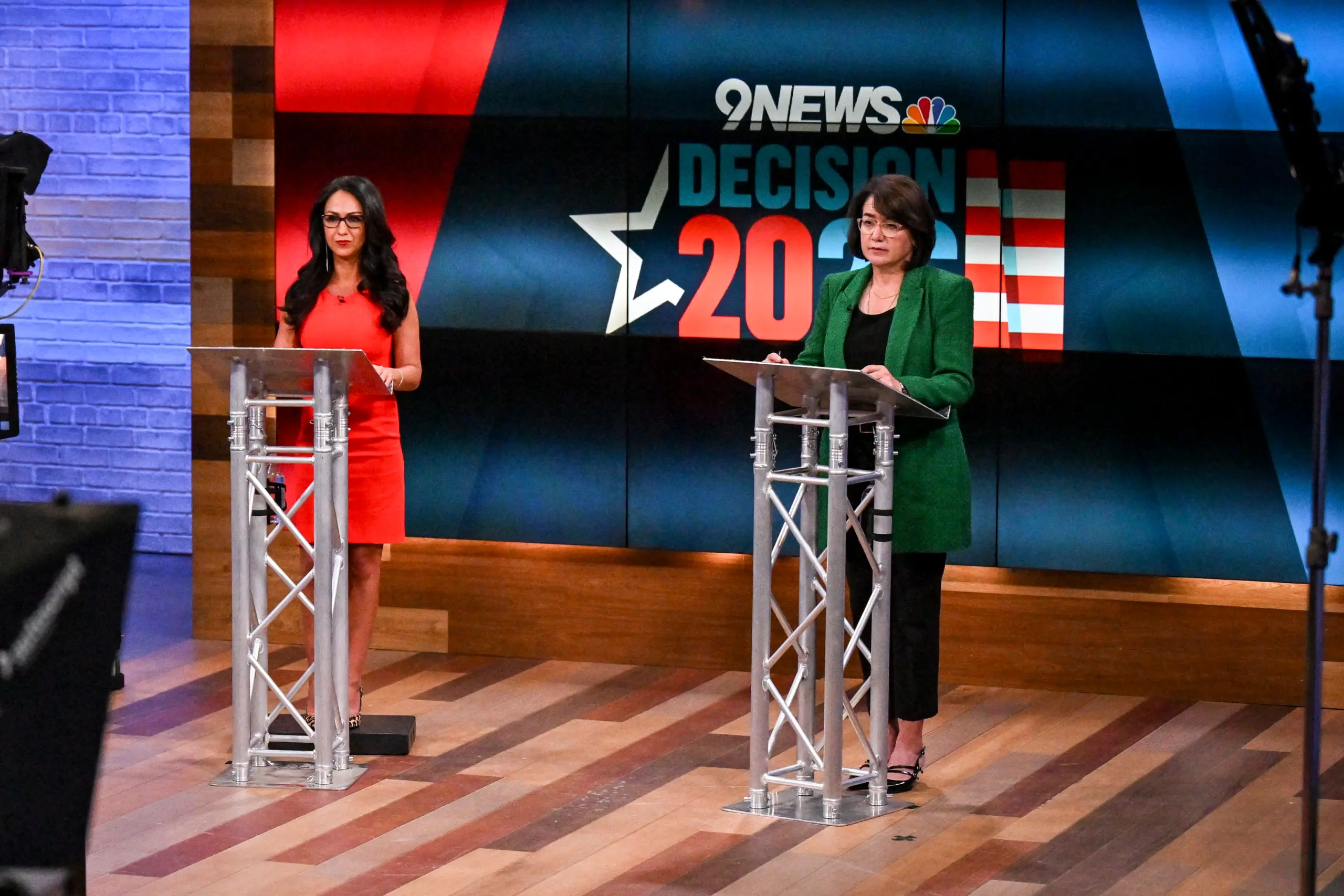
Hickenlooper previously told The Post he would support reforms to the U.S. Supreme Court. During a 9News debate earlier this month, he said he regretted voting for any of the president’s cabinet picks last year, though he said in an interview that he wouldn’t reflexively oppose any future nominee that Trump put forward to the high court.
“I’m constantly made aware of how frustrated and unhappy people are, and they’re so angry at President Trump, at the White House, at Congress, at everything,” he said. “So we’re trying to do everything we can to really hear people.”
Stay up-to-date with Colorado Politics by signing up for our weekly newsletter, The Spot.