







Colorado transportation officials broke ground Monday on a long-planned makeover of Interstate 270, a key metro Denver artery that has been plagued by crumbling infrastructure and intense congestion.
Read more 15-year-old boy missing from Golden neighborhood
Built in the mid-1960s, the nearly seven-mile-long I-270 connects Interstates 25 and 70 from the I-25/U.S. 36 interchange to northeast Denver. The freeway serves as a major corridor for commuters in and around Commerce City, as well as for freight trucks hauling goods and supplies.
CDOT officials say the highway wasn’t built to handle its current traffic demands, which have risen to more than 100,000 vehicles per day. It was the only interstate serving many motorists that had yet to see a major upgrade.
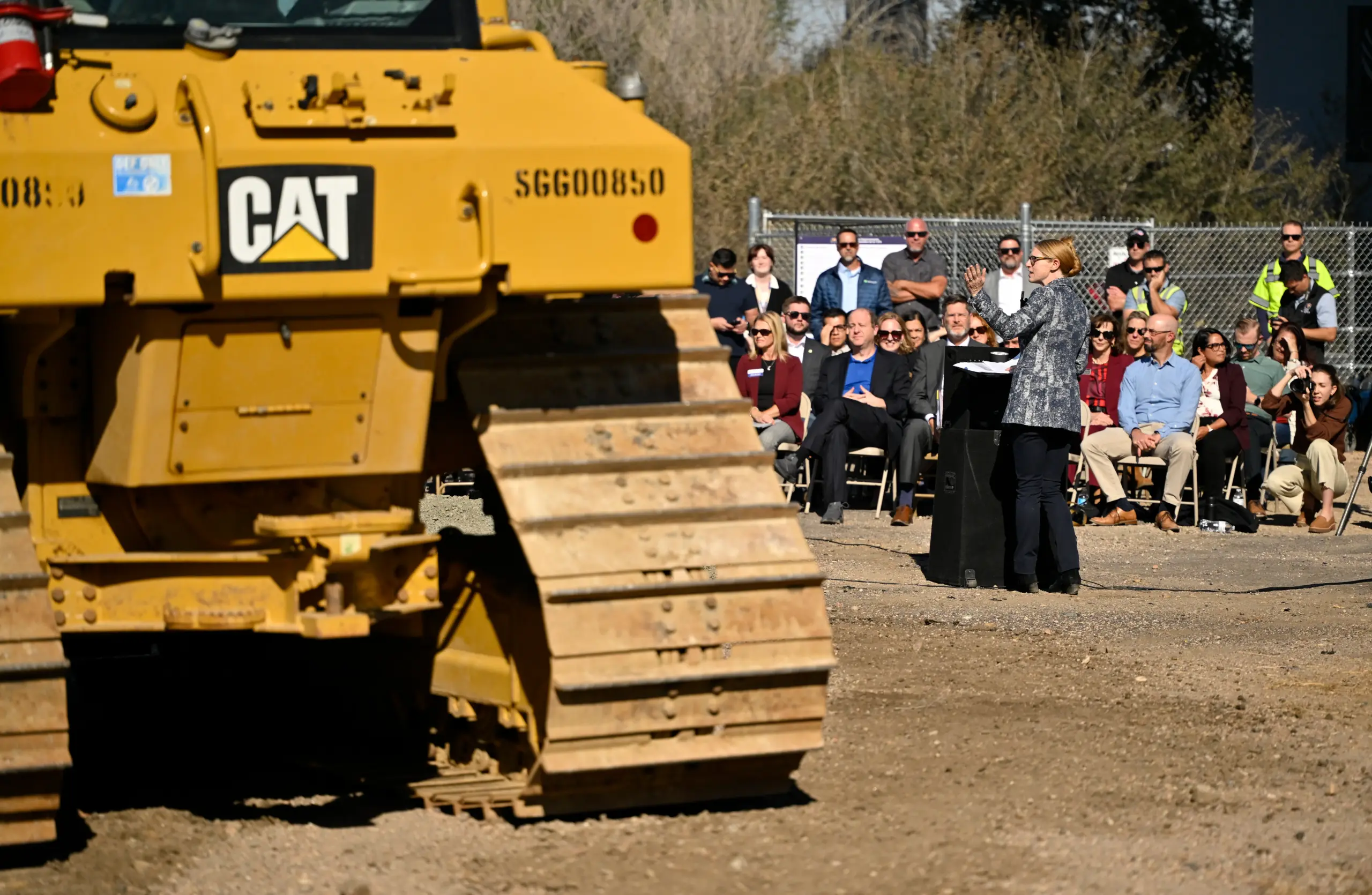
“This corridor is in desperate need of improvement,” said Shoshana Lew, the executive director of the Colorado Department of Transportation, during a groundbreaking ceremony beneath one of the interstate’s aging bridges in Adams County.
Other attendees included Gov. Jared Polis and Sean McMaster, the administrator of the Federal Highway Administration.
At the heart of CDOT’s project is the addition of tolled express lane in both directions, which will be free to access for buses, motorcyclists, and drivers of cars with three or more passengers.
Other aspects of the I-270 project include replacing 12 aging bridges, rebuilding the Vasquez Boulevard interchange, building a pedestrian bridge over the interstate between East 56th Avenue and Quebec Street, improving on- and off-ramps at Interstate 76, and adding a smattering of sidewalks, multiuse paths and bus stops along local streets.
Officials say the upgrades will improve travel time on the interstate and, in turn, deter motorists from being forced to use I-70 and I-25 as detours, which has only further exacerbated congestion.
At $806 million, the project’s price tag is already nearing that of the I-70 Floyd Hill Project in the mountains, which is currently at its midpoint and is CDOT’s largest single road project now underway.
The I-270 project is set to be completed across three phases. In the first, crews will redo the roadway and replace bridges that are in the most critical conditions. Those include bridges over the South Platte River, Burlington Ditch, Brighton Boulevard and East 60th Avenue.
CDOT projects the first phase will be completed in 2030, with the rest of the project finished in 2033.
Widening draws protests
While state leaders heaped praise on the plans, the project faces intense pushback from environmental groups. They warn that adding lanes to the highway will only lead to more traffic and pollution in an already heavily industrial area.
Environmental advocates point to the $1.6-billion I-25 widening project completed in 2006 through southeast metro Denver. Known as T-REX, the project included the addition of up to two new lanes in each direction in some sections. Yet traffic on the interstate has only filled in since then, and it remains a serious pain point for motorists.
GreenLatinos and Earthjustice, two national environmental nonprofit groups, last year asked CDOT to consider an alternate proposal for I-270. It would have avoided adding new lanes in favor of tolling the highway’s existing four lanes in accordance with peak travel times (with discounts or potential zero-fare costs for local residents).
Read more Suspicious letters sent to at least 5 members of Colorado’s congressional delegation
Environmental advocates also wanted more investments in other modes of travel, like buses and pedestrian infrastructure.
Jamie Valdez, a transportation and energy advocate for GreenLatinos’ Colorado branch, said the organization continued to hear concerns from local residents worried about what increased traffic would mean for a corridor that touches part of one of the most polluted zip codes in the country. He said the project was more focused on economic impacts than public health.
“It’s a situation where commerce, i.e., profits, are being put once again ahead of the needs and impact to the community,” Valdez said.
‘We found a way to move forward together’
Adams County Commissioner Julie Duran Mullica acknowledged the importance of I-270 to the local economy during Monday’s groundbreaking event. She said the freight corridor carried local products from Adams County across the state.
But she also thanked community members who spoke up about the project.
“We listened to the people who live in this corridor,” she said. “And I want to be clear: Maybe we didn’t get everything we asked for in this project, but I think that we found a way to move forward together.”
CDOT officials said planning for the project underwent six years of community engagement and a rigorous environmental impact study, with the agency publishing a final report last month. Officials say they’ve adopted several recommendations from community conversations that are aimed at expanding travel options and improving public health.
Those include adding new air quality monitors along the interstate, launching a slew of improvements to local streets, and helping the Adams 14 and Mapleton school districts obtain grants for electric school buses.
“What you’re seeing here is a project that’s not the same project that it would have been without advocacy,” Lew said.
The state last year also published an , stating that while emissions could rise during project construction, the addition of an express lane would not increase emissions.
The study attributed that finding to shorter travel times due to safety and congestion improvements that it said would reduce the amount of greenhouse gases emitted by vehicles per mile driven. CDOT said improved travel conditions on the interstate would also take more cars off surrounding roads.
Environmental groups have questioned the findings, saying highway-widening projects have historically resulted in more cars on the road that bring more emissions.
In a statement, Alexandra Schluntz, a senior attorney for Earthjustice’s Rocky Mountain Office, cited decades of experience with highway widenings, as well as an . Both “demonstrate that the project will result in more traffic, more pollution and overall longer commute times for many Commerce City residents by redistributing instead of reducing congestion.”
Read more Sarah Parady makes endorsement in 10-candidate race to fill her former Denver City Council seat
Get more Colorado news by signing up for our Mile High Roundup email newsletter.