






The state government should buy 10,000 acres of a sprawling southern Colorado ranch and open that tract to the public to help resolve a yearslong dispute between the ranch’s owner and San Luis Valley residents, according to a new report commissioned by the governor.
Read more USS Abraham Lincoln returns to San Diego after long combat deployment in Middle East
The purchase of a portion of the 83,000-acre Cielo Vista Ranch is part of a larger deal proposed in the report, released late Wednesday. It also calls for valley residents who have a legal right to access the property through a decades-old land grant to promise to concentrate their activities in specific areas on the ranch. The property’s out-of-state billionaire owner would maintain a buffer zone around his home and ranch buildings.
The report proposes the deal as a solution to the long-running conflict in Costilla County, which has spurred lawsuits and a breakdown in communication between the ranch’s owner, William Harrison, and the broader community.
Gov. Jared Polis in early September appointed Ken Salazar — a native of the valley who previously served as a U.S. senator, Colorado attorney general and U.S. secretary of the Interior — to hire a facilitator and explore resolutions to the disputes regarding the ranch. Known as “La Sierra” by locals, the ranch includes 19 mountain peaks, including 14,053-foot Culebra Peak.
The dispute with Harrison has marked the most recent flare-up in decades of tension between several owners of the ranch property and hundreds of valley residents who can legally access the property through rights that were granted to their families before Colorado became a state. Over the last 50 years, that tension has manifested as multiple lawsuits, protests and attempts by two governors to resolve the issue.
The report draws from multiple community meetings, conversations with more than 100 residents and discussions with Harrison. Its author, consultant Berrick Abramson, who was hired as the facilitator, urged the state to act quickly or risk losing the momentum generated by those discussions.
“If this opportunity is lost, the record suggests it may not present itself again for a generation or more,” Abramson wrote.
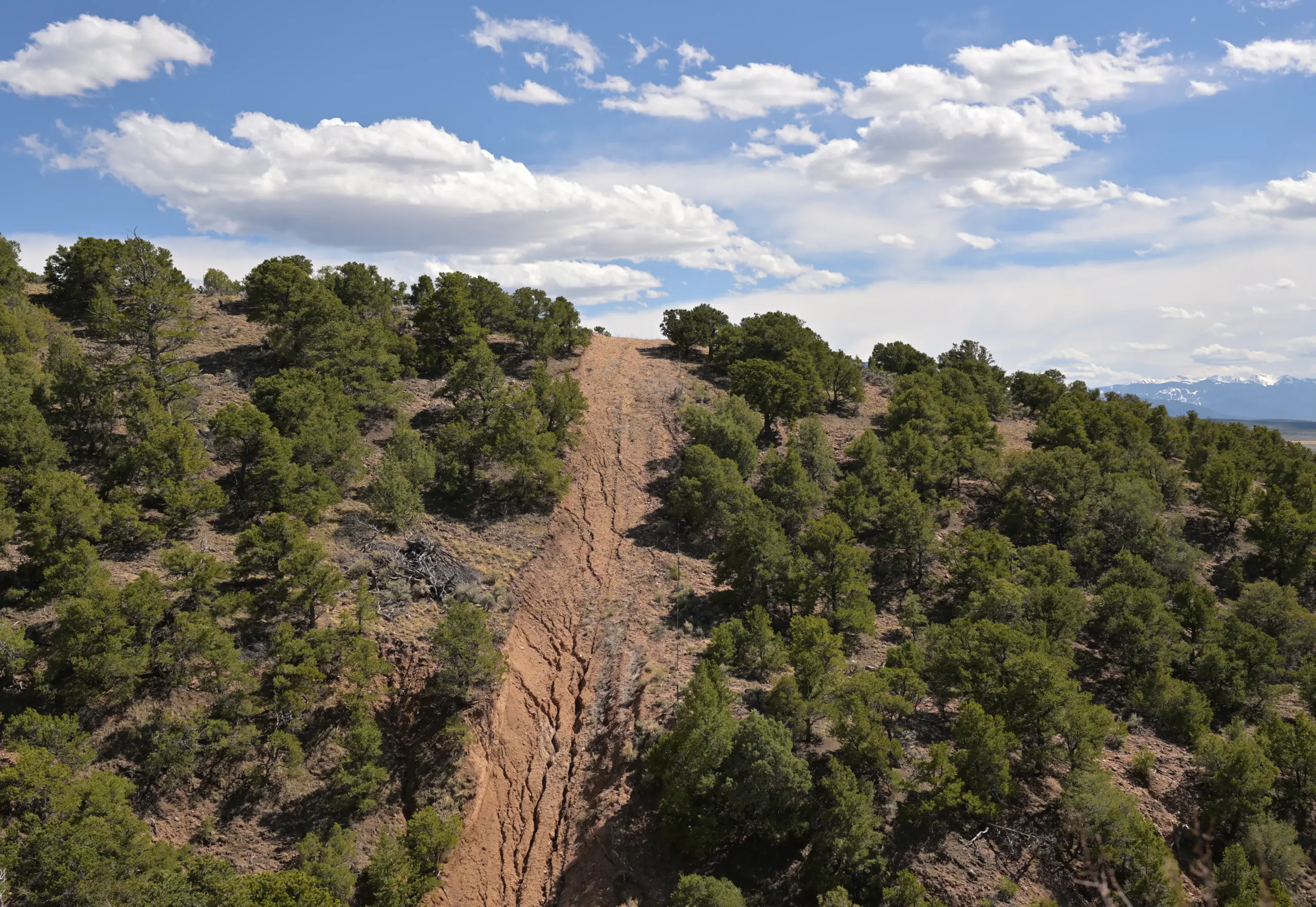
The most recent conflict erupted when Harrison began to erect an 8-foot-tall fence across portions of his property line, complicating access for those with rights to enter the land, blocking wildlife movement and causing erosion. The fence construction spurred still-ongoing litigation with the county, a state-led water quality investigation, a new state law and rewritten county regulations banning large fences.
The battle has played out in a county where about a quarter of people live below the federal poverty line and the median income is $34,500, according to the U.S. Census Bureau.
“The ongoing litigation over La Sierra will continue for decades unless an end to the conflict is found that resolves the current and future litigation on matters including the rights of the historic use owners and claimants and the owners of Cielo Vista,” Salazar wrote in a letter to Polis that accompanied the report.
Read more CU Buffs defense tops the class in Colorado’s midterm report card
This is not Salazar’s first attempt at finding a solution to the decades-old conflict.
In 1993, Salazar, in his role as director of the Colorado Department of Natural Resources, urged then-Gov. Roy Romer to create a commission to explore the possibility of the state purchasing the ranch. But the commission, chaired by Salazar, couldn’t find money for the deal, and it stalled out.
Harrison, the heir to a Houston oil fortune who bought the ranch in 2017 for $105 million, rejected the prospect of selling all or most of the sprawling property to the state, according to the new report. And residents with land access rights firmly rejected any deal that would require them to give up their rights to the land.
But both Harrison and community members agreed that clearer, modernized access rules were needed, according to the report. All parties engaged in good faith in the discussions.
The report recommends that in the next 45 days, the state finalize terms with Harrison to acquire about 10,000 acres of the ranch. Rights holders as well as the public would have full access to that parcel, including for recreational activities the rights holders cannot legally engage in on the ranch now, like fishing or hiking.
Along with the acquisition, the report says the state should broker an agreement with people who have access rights to establish clear access rules and a buffer zone around Harrison’s buildings. The rights holders would still maintain access to the ranch, but they’d promise to concentrate their grazing and firewood collection on specific areas of the property.
The report does not identify how the state might pay for the purchase of the land and notes that “a general fund appropriation is unlikely.” On Thursday, a second news release put out by Polis’ office suggested other possible options by saying the state could acquire it “through gift or purchase.”
“The state can not compel anyone involved to act to resolve this conflict; resolution can only be done through good faith engagement and cooperation, which is what we have seen from all parties during this process,” Polis said in a statement Wednesday. “I am grateful for all who are working for a better outcome than the conflicts of yesterday.”
Stay up-to-date with Colorado Politics by signing up for our weekly newsletter, The Spot.
Read more Pentagon says the firing squad execution of Fort Hood shooter Nidal Malik Hasan will be livestreamed