







Aurora is becoming the epicenter of new home construction in Colorado, hosting a majority of the largest master planned communities taking shape along the Front Range.
And one future community in particular stands out not for its design or size, but for who is behind it.
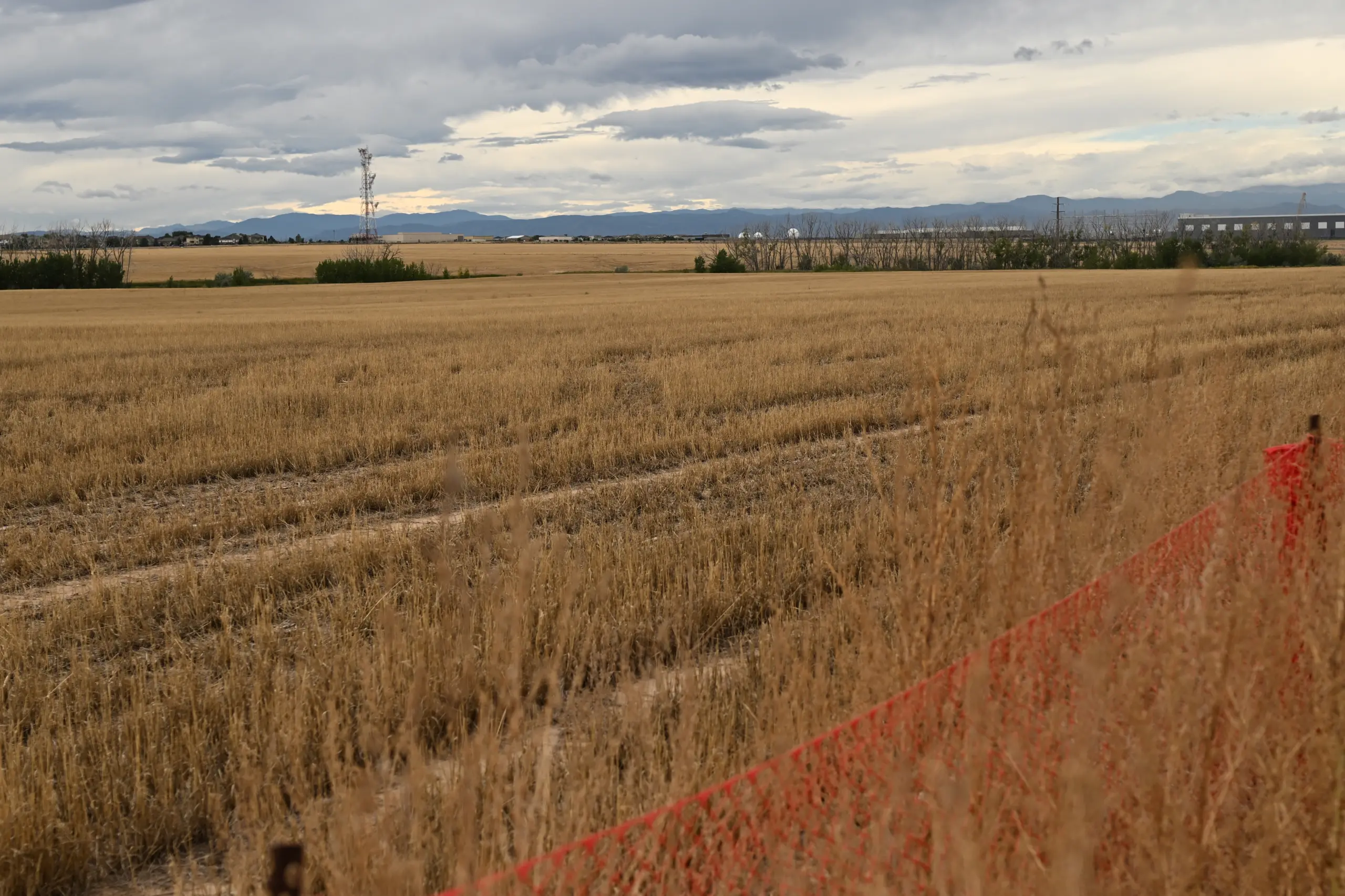
Property Reserve Inc. (PRI), a real estate investment arm of The Church of Jesus Christ of Latter-day Saints, is developing the Tributary community on 960 acres south of Denver International Airport and east of E-470.
The church began acquiring large parcels of agricultural land during the 1970s and 1980s around what would become DIA in 1995.
For decades, it farmed the land via leases until suburban growth slowly encroached and infrastructure development expanded into an area now known as the Denver Aerotropolis.
That development zone around the airport covers 21,000 acres in Denver, Aurora and Adams County and is expected to become an increasingly important driver of economic growth in the region.
Besides being a key industrial and distribution hub, the zone includes several new residential communities — The Aurora Highlands, Tributary, High Point, Windler and Painted Prairie.
After decades of accumulating and sitting on land, the harvest time has come. PRI has become an active master developer of large-scale residential communities in multiple states, according to the trade publication “The Real Deal.”
One opportunity that is ready is Tributary, whose boundaries stretch from Interstate 70 on the north down to 6th Avenue on the south, and from Harvest Road on the west to Monaghan Road on the east.
Once it is completed over the next two to three decades, Tributary should add more than 12,000 residents to Aurora’s population.
Plans also include two commercial and retail areas, multiple parks and open spaces, trails, a recreation center, a school and a fire station.
A patient approach
Property Reserve has invested in real estate on behalf of the LDS church since the 1960s, and Bloomberg estimates the church owns at least 2.4 million acres with an assessed value of more than $20 billion.
For decades, the investments were mostly passive, focused on accumulating holdings in agriculture, ranchland, timber acreage, and sometimes commercial real estate.
In the 2000s, PRI pivoted to more active development on smaller residential projects, acting as a land aggregator and entitlement planner.
But in the past decade, it has become an active master developer, building out infrastructure on rural land holdings and guiding the vision of major residential communities in Utah, Florida, Arizona and now Colorado.
PRI has also accumulated significant land holdings in Texas, including 3,000 acres near Austin with pre-existing residential development rights.
Sunbridge, southeast of Orlando, is the company’s flagship residential community. It covers 27,000 acres, and the first of 36,000 planned homes there were occupied in 2020.
Tributary is on the smaller side by comparison. But PRI has other acreage nearby that could be developed into future commercial or residential projects.
Tributary’s website makes no mention of PRI as the master developer or of the project’s church links. And during a meeting to amend Tributary’s zoning and master plan in May, PRI’s land asset manager Dane Hill kept a low profile.
Part of that likely reflects a desire by the church to keep religious and spiritual operations distinct from its more business ones.
A request for more information sent via email to the church was not answered prior to publication.
A large planned community
Tributary ranks as one of the city’s largest planned communities after the Aurora Highlands, now the state’s largest under development at 4,000 acres, and High Point, which covers 1,800 acres.
Tributary, south of the much larger Aurora Highlands, is slated to provide up to 4,859 housing units on 435 acres set aside for single-family residential and 58 acres for multifamily, Sarah Wile, a senior planner with Aurora, told members of the city’s Planning & Zoning Commission at a May 13 meeting.
About 81 acres is slated for mixed commercial uses, primarily along I-70 to the north, with a smaller 27-acre commercial and retail development along 6th Avenue and Harvest Road on the south end of the development.
The community will also include 207 acres of parks and open space and connections along First Creek, Wile said.
Tributary derives its name from First Creek, which bisects the land and will help define the new community, including in its design.
Read more DHS voter probe may break state laws and wrongly implicate US citizens, whistleblower alleges
“It’s been designed to embody life’s invigorating ebb and flow. Filled with lively retail, wholesome homes, and a cascading park network, Tributary is a community alive with movement that brings neighbors and nature together in a refreshing new way,” Elise Applegate Clink, a planner with Norris Design in Denver, said at the May meeting.
Norris Design represented PRI as it sought approval for zoning changes and a variance that would allow it to construct homes at a higher density in May.
Aurora limits the share of small lots in new neighborhoods to 50% of the total, but PRI asked to lift the ratio to 65%, which would boost density.
Wile said the adjustment, which the commission approved, would provide Tributary with 333 additional lots compared to the city’s existing limit.
“As a part of this adjustment request, we have to provide compensation in other ways to make sure that it’s still a very livable community with this increased density … parks, trail corridors, or open space within a quarter mile of any home site,” Clink said.
Construction timing will be closely tied to the development of transportation infrastructure in the largely undeveloped area.
Chief among those is a new interchange at I-70 and Aerotropolis Parkway, formerly Harvest Road, which the Aerotropolis Regional Transportation Authority broke ground on last year.
The new interchange, expected to be completed later this year, will add on- and off-ramps and a new bridge across the highway. It will also eliminate the frontage road, put in drainage ponds and add roundabouts.
The rebranded Aerotropolis Parkway will also be widened and improved down to 6th Avenue to accommodate the heavier traffic from surrounding development.
Another adjustment the commission approved regarded signage.
New communities in Aurora are limited to one sign at a maximum height of 30 feet. Tributary was granted two 75-foot-tall signs on each side of Harvest Road along the highway.
“We worked with staff to try to address signage that probably wasn’t really anticipated in the initial signage (code) along high‑speed interstates, trying to draw attention to large retail centers,” said Sean Malone, a principal at Norris Design.
Malone also argued that the larger signs were important for the success of the future commercial district located next to the highway.
“Three zoning changes for Tributary were approved by the City Council in June. The Master Plan itself didn’t require council approval,” Aurora spokesman Joe Rubino said.
Most master planned communities are financed and governed through a metro district via what is known as a Title 32 Service Plan.
Tributary hasn’t submitted a separate service plan, but Aurora City Council approved multiple service plans in the summer of 2023 that cover its location, said Michael Kerrigan, Aurora’s special district administrator.
“Those First Creek Powahatan Metro Districts cover the geographic area of the Tributary master plan,” he said in an email.
Community opposition also appears to be fairly limited, especially when compared to Prairie Point, a 900-acre community along E-470 and Parker Road in southeast Aurora that recently broke ground.
Developer Oakwood Homes wants to build about 1,700 homes alongside an 18-hole golf course, which should boost home values and draw in more buyers.
But golf courses also soak up water, which isn’t sitting well in a city that has asked its residents to cut their usage by 20%, noted area real estate agent Landin Smith in a YouTube video.
“What sets people off is a brand new golf course in a drought at the same time that they are being asked to let their lawns go brown. That is the nerve that it hit,” Smith said.
Aurora notified 122 adjacent property owners and nine registered neighborhood groups of the Tributary application, generating three complaints, Wile said.
Those raised concerns about heavier traffic, residential density, environmental impacts, and the need for more commercial services in the area.
When a public hearing was held in September 2024, only one person attended, and he didn’t raise a complaint, she said.
Get more real estate and business news by signing up for our weekly newsletter, On the Block.
Read more Supreme Court rejects Trump mail ballot restrictions for now ahead of midterms