





If one of the people buried below Cheesman Park, Denver’s graveyard turned grassy urban sanctuary, were to rise from the dead, it turns out all you’d need to fend them off is a Frisbee.
Read more Historic Downtown Denver restoration of 2100 Larimer takes another step forward
Or so it goes in a local software engineer’s new online game, in which players deputized as park rangers fight ghouls, frolic through the Denver Botanic Gardens and learn the history of one of the city’s most infamous public parks.
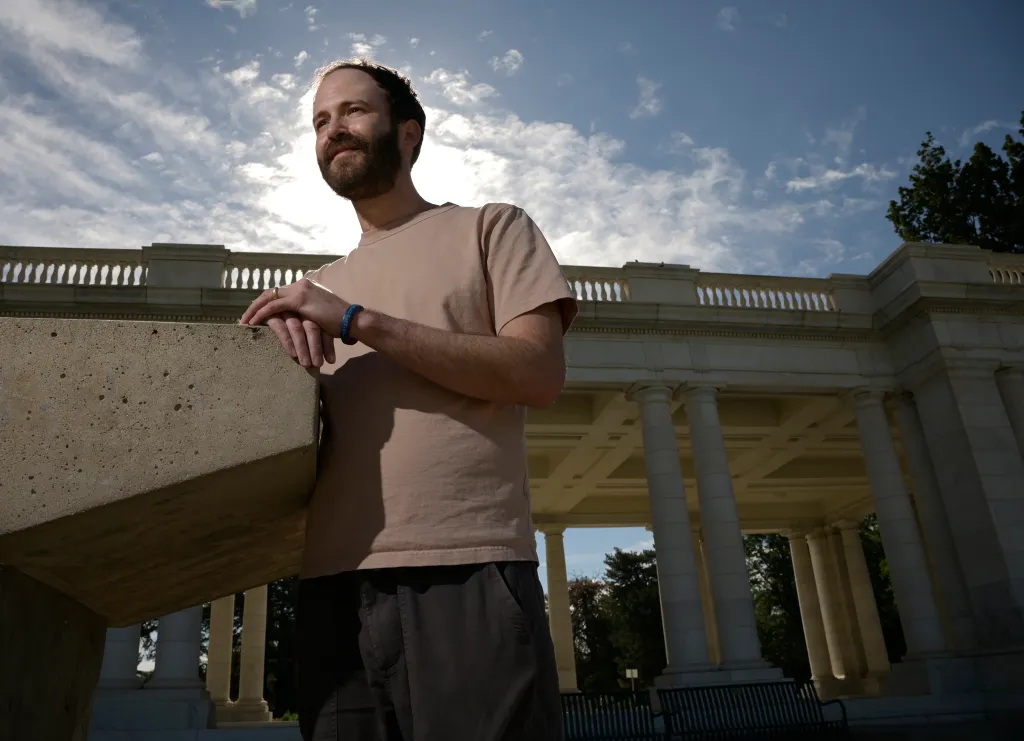
Cheesman Park: The Game, created by 33-year-old Casey Cantor, is filled with recognizable landmarks from the 80-acre park, brought to life one pixel at a time. To play the free game on a computer or smartphone, visit cheesmanparkthegame.com.
“This is a love letter to Cheesman Park,” said Cantor, who has no plans to monetize the game. “I told my wife yesterday that I would be so satisfied if some people played it, and maybe a local paper would write about it. Mission accomplished.”
Cantor and his wife live a couple of blocks from the park, which is bordered by Humboldt Street, Race Street, 13th Avenue and Eighth Avenue. The software engineer lived in Denver after college from 2015 to 2018 and then moved back with his wife a year ago.
When searching for a neighborhood to call home, Cantor took his wife to Cheesman Park, where they both fell in love with the area.
“The park is the biggest reason we picked this neighborhood to move to,” he said.
Cantor’s game-making started about the same time he moved back. He grew up playing video games like World of Warcraft and Halo, but also enjoyed so-called “cozy” games with cute worldbuilding like Animal Crossing and Stardew Valley.
Cantor realized the rapid evolution of artificial intelligence, paired with his software engineering skills, enabled him to create just such a cozy game himself, without having to hire other people. He cut his teeth making a horse-racing game called Pocket Derby — a process he found gratifying.
When his friend asked a few weeks ago whether he was going to make another game, Cantor found a muse in one of his favorite places — a neighborhood staple with spooky lore that would lend itself well to storytelling.
“Basically, the game made itself with the history of the park, the spooky history of it all,” Cantor said. “I knew I wanted something to do with ghosts and zombies, but also wanted to do some of the happier, more friendly parts of the park.”
Players who frequent the park are in for a treat spotting familiar sights.
In the game, as in real life, dancers groove in the iconic Cheesman Park Pavilion. Volleyball games are underway. Dogs and squirrels abound. The rose garden is flourishing.
Read more Outbreak of diarrhea-causing parasite grows to more than 1,000 cases
When nighttime falls, the game’s friendly parkgoers turn into zombies and ghosts who chase the park ranger, armed with nothing but a Frisbee deployed by the keyboard’s space bar. The aim of the game is to survive as many nights as you can before you’re zombie chow.
Players may run into E.P. McGovern, the undertaker the city hired in 1893 to remove the remains of the bodies buried in the graveyard that now exists as Cheesman Park.
The cemetery opened in 1858. By 1910, the land had a scandalous conversion to a public park and was named after Walter Cheesman — a local businessman and booster whose fortune after death went toward financing the park’s iconic pavilion.
Infamously, McGovern did a literal hack job on the bodies, cutting them up and distributing them among multiple caskets to cash in on more profits. Human bones and coffin remnants have been found in the modern park and adjacent Denver Botanic Gardens. (In a bonus level of the game, players dash through the gardens.)
From start to finish, Cantor said the game took him six days to make and launch. He posted it on social media and plans to hang fliers in Cheesman Park that say “Enjoying Cheesman Park? Play the game!”
Cantor credits AI with the quick deployment, along with his own software skills and on-the-ground work. To re-create the park so well, he used overhead shots he found via Google and his own photos from walking the park.
“A few years ago, this would have taken five people a few weeks to make and nobody would have funded it, but now the technology is so great, those things are possible,” he said.
Now that he’s had a taste for it, Cantor is inspired to re-create even more Denver landmarks through computer gameplay.
“One person really can make something specific to their corner of the city, kind of like a love letter of the things important to them,” Cantor said.
Get more Colorado news by signing up for our daily Your Morning Dozen email newsletter.
Read more CU Buffs looking forward to Atlanta trip to open season