







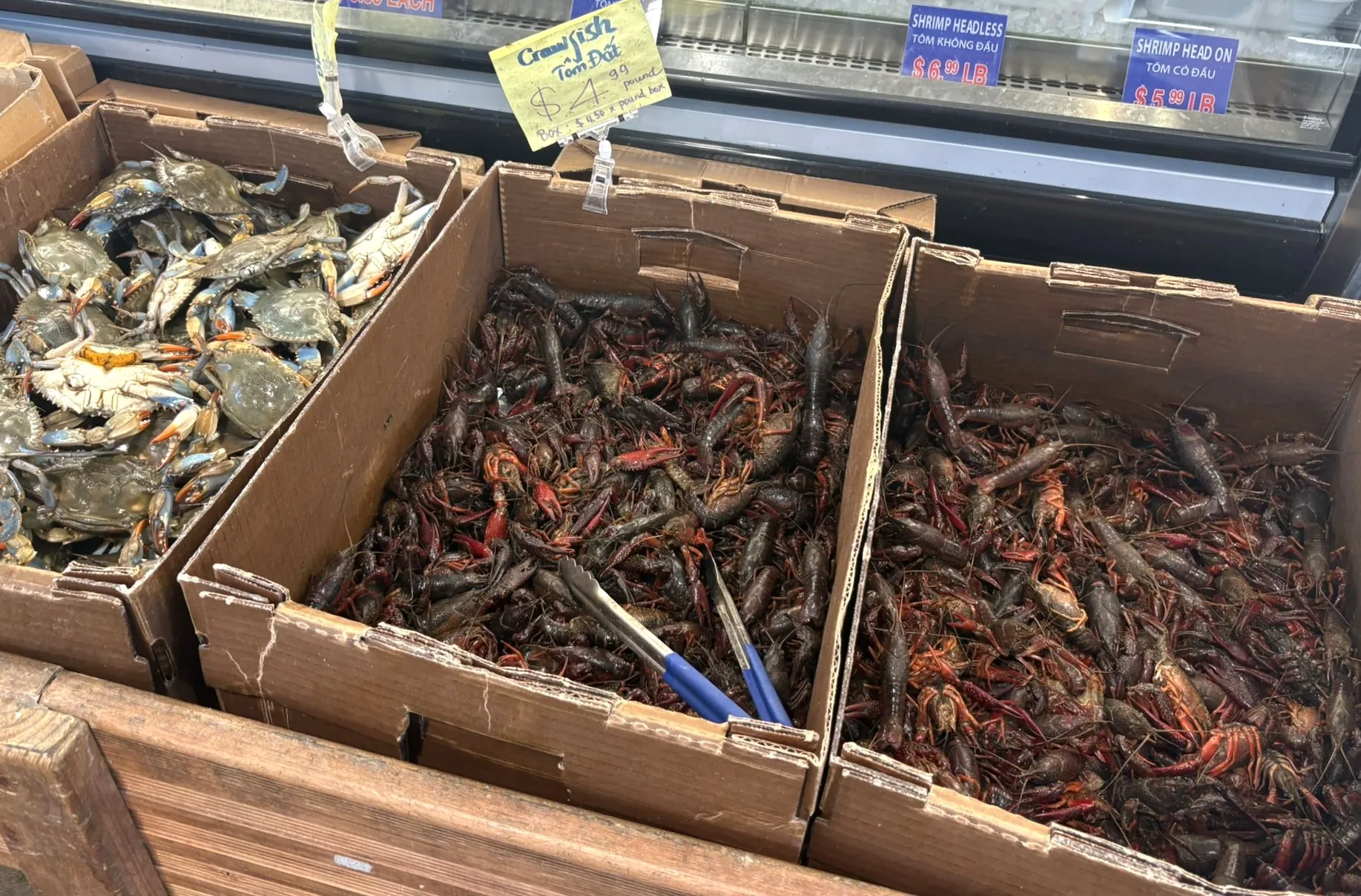
On a recent Sunday afternoon, shoppers crowded the aisles at Tri Ocean Seafood Market on South Federal Boulevard, weaving around carts piled high with dragon fruit, Thai bananas and bundles of fresh herbs. In the back, tanks bubbled with live lobsters while crawfish squirmed in boxes nearby. Buckets overflowed with conch and clams, and customers pointed to whole fish on ice to be cleaned and cut for dinner.
Read more Today in History: September 17, Robert Durst convicted of murder
“A lot of customers ask me where we get our seafood,” said Ann Le, who owns Tri Ocean with her husband, Tri Nguyen. “It’s from everywhere.”
Blue crabs and crawfish are sourced from Louisiana, while shellfish such as oysters, Manila clams and cherrystone clams arrive from waters stretching from the East Coast to Asia. Fresh fish are shipped in from California and Florida.
“Whole catfish is the most popular of all of them, and we cut it however the customer wants,” said Le. “We have a lot of different kinds of fish every week – whole red snapper, big king mackerel, cobia, pink grouper, halibut, all kinds of things.”
There is also frozen fish imported from countries like Vietnam, China and Thailand that are not readily found in the U.S. One example is basa, also known as swai, a freshwater catfish native to Southeast Asia.
“It comes from Vietnam. It is similar to the catfish we have in America,” Le said. Customers regularly seek it out for dishes they grew up eating, including Vietnamese soups and stews.
“Some customers will come in looking for it because we use it in traditional dishes like sweet and sour soup,” she continued. “I always try to bring in the new thing. Some of the customers, they said, ‘Ann, I don’t need to go back to Vietnam or Cambodia to buy this stuff anymore.’”
Beyond the seafood counter, the produce department offers tropical fruits rarely stocked at mainstream grocery stores, including jackfruit, multiple varieties of dragon fruit and lychee from Florida, Hawaii and China. Le is particularly fond of the store’s Thai green bananas, which remain bright green even when fully ripe and develop an intensely sweet flavor. Other specialty offerings include Asian plums, Hawaiian longan and a rotating selection of seasonal tropical fruit.
Le and her husband purchased their current location at 903 South Federal Blvd. in 2021, but have operated Tri Ocean since 2008. Over the past 18 years, she has watched both the business and the surrounding neighborhood grow.
“When we started, this area was kind of quiet,” Le said. “Nowadays we have more customers.”
Tri Ocean’s customer base remains predominantly Vietnamese and Chinese, but the store increasingly attracts non-Asian shoppers searching for fresh seafood, tropical produce and hard-to-find specialty items, like authentic pho ingredients. Some arrive looking for viral 3D fruit-shaped ice cream bars popular on social media, while others travel significant distances for the seafood selection. Le recalled one customer telling her a trip from Wyoming was worth it after finding live lobster for about $14.99 per pound.
While business has increased, so have the challenges of operating a grocery store.
“Everything goes up,” she said. “The freight, the minimum wage and everything.”
Despite rising costs, Le said she works to keep prices reasonable. Nearly two decades ago, live blue crabs sold for around $5.99 per pound. Today, they’re typically priced at about $6.99 per pound.
“We try to keep it as reasonable as we can,” she added.
The Denver metro area has dozens of immigrant-owned grocery stores that serve as both marketplaces and cultural anchors. From Mexican carnicerías and halal markets to African grocers and Eastern European delis, these businesses provide access to ingredients, traditions and flavors that can be difficult to find elsewhere.
Here are some to try.
Carnicería Los Dos Toros
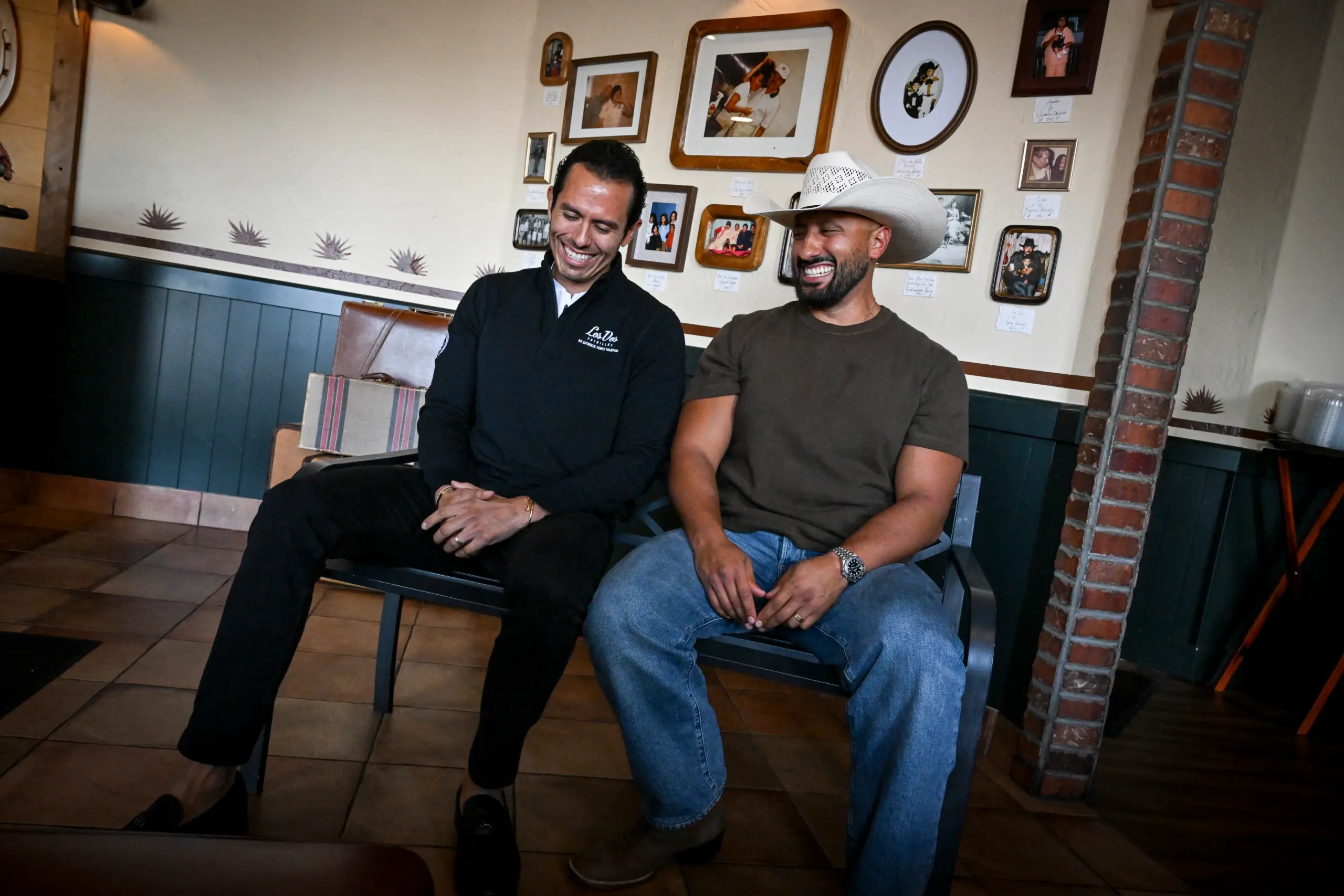
Abel Casillas bought Carnicería Los Dos Toros at 2600 W. Alameda Ave. in 2009, and has been selling freshly cut meats, house-made tamales, baked goods and ingredients commonly used in Mexican and Latin American cooking ever since.
“In the first three years, it was pretty much Latin American people,” Casillas said. “Then in the fourth year, I started to get a more mixed community.” Today, the customer base reflects the diversity of the surrounding neighborhood, with shoppers of all backgrounds stopping in for specialty products, custom cuts and prepared foods.
Los Dos Toros specializes in meats prepared to customers’ exact specifications. While many American shoppers prefer thicker steaks and roasts, Casillas said Latino customers often seek thinner cuts commonly used in dishes such as carne asada. Customers planning large gatherings can also purchase meat by the case at discounted prices.
We cut any dimension they want,” Casillas said. “That gives them the choice.”
The market also offers ready-to-cook meats like discada, beef and chicken fajitas, and al pastor pork.
Beyond the butcher counter, shelves are stocked with cheeses, creams, ham, fresh salsas and imported products, while the store also carries a variety of spices and dried chiles such as pasilla, guajillo and árbol. An on-site kitchen produces tamales and daily and weekend specials like barbacoa and menudo, while the in-house bakery turns out bolillos, pan dulce and other Hispanic breads and pastries.
Originally from Mexico, Casillas immigrated to the United States at age 20 and has now been here for 50 years, spending decades building relationships within the community.
“The attention to the people is personal,” he said. “If anything doesn’t meet the expectation, they can return it, and we’ll give the money back.”
Zu Carne Market
About a mile west of Carnicería Los Dos Toros, Zu Carne Market, at 3465 W. Alameda Ave., has spent the past six years building a loyal customer base around fresh meats, house-made products and a curated selection of Latin American groceries. Manager Javier Palomino, who has been with the market since it opened, describes the business as a full-service neighborhood grocery store where customers can pick up everything from specialty cuts of meat to tortillas made by the company’s off-site tortilleria.
“Here, more than anything, we handle cuts of premium quality,” Palomino said. (Editor’s note: The Denver Post’s interview with Palomino was translated from Spanish to English and lightly edited for clarity.)
Read more Gary Barnett’s run at Northwestern put Wildcats football back on map
Unlike conventional supermarkets, Zu Carne carries specialty products such as goat meat, lamb shank, turkey tails, honeycomb tripe and book tripe, plus sliced skirt steak, oxtail, beef shank and ribs. Customers can also request custom cuts prepared to their specifications.
Palomino believes quality is what sets the market apart. While some supermarket cuts contain excess fat or trimming waste, he said Zu Carne focuses on cleaner cuts and careful preparation.
“Whatever the customer asks for, we make the cut that he likes,” he continued. “Here it is pure, one hundred percent quality. Almost zero waste.”
In addition to the butcher counter, the store offers Mexican, Central American and South American pantry staples, alongside Mexican medicines, candies like palanqueta and mazapán, bags of chicharrones, dried herbs and chiles, and fresh fruits and vegetables. There are also fresh-baked goods like pastries, flans, bolillos and breads, and an on-site kitchen where customers can order tacos, tamales, soups, burritos, birria and more.
While the majority of shoppers are Latino, particularly Mexican, Palomino said the market’s appeal extends to other communities as well. Holiday weekends such as the Fourth of July often bring an influx of non-Latino customers searching for grilling meats and competitive prices.
“The price here is more accessible, cheaper,” he said.
Aladdin Halal Market
When Hasabo Ibrahim first arrived in Colorado in 1998, finding halal food often meant navigating mainstream grocery stores and carefully checking products one by one.
“I go to King Soopers. I go to Walmart. I go to Costco,” said Ibrahim. “But always I’m looking, ‘Is this halal or not? Is this halal or not?’”
Today, customers searching for halal foods (which are processed according to Islamic dietary requirements) can find them at Ibrahim’s store, Aladdin Halal Market (formerly Gulzar Halal Market) at 10315 E. Iliff Ave. in Aurora’s Iliff Pointe shopping center. The grocer features a halal butcher with lamb, beef, chicken and goat meat; halal cheeses and yogurts; fresh-baked Khubuz and Samoon breads from the on-site bakery; imported juices; dates; a variety of grains; and other pantry staples from across the Arab world.
Fresh deliveries arrive twice weekly from a Colorado halal meat supplier, with lamb and beef among the store’s best-selling products. According to Ibrahim, the market primarily serves Arab, Middle Eastern, Indian and Asian customers, though American shoppers have increasingly discovered the shop as well.
“I like to offer stuff for the community that they cannot find in King Soopers or Walmart and Costco,” he said.
Behind the grocery aisles, customers will also find a small restaurant serving Middle Eastern specialties like kebabs, shawarma, hummus and rice plates alongside burgers, sandwiches and breakfast items. Chef Sinan Abdulsatar, who immigrated from Baghdad in 2012, prepares much of the menu throughout the day. Rather than cooking large batches in advance, he continuously replenishes the shawarma spit and grills rotisserie-style chicken fresh to order.
“Every two hours, the chicken is ready,” Abdulsatar said of the chicken that needs to be ordered in advance. “If you call before, I will give you fresh chicken.”
Nana’s African Market
Tucked into the same Aurora shopping center as Aladin Halal Market, Nana’s African Market, 10223 E Iliff Ave., has served the local West African community for over 15 years.
According to Bridget Ofori, who helps run the family business, shoppers come from all over metro Denver, Colorado Springs and even neighboring states such as Wyoming and Nebraska. The market stocks a wide range of West African staples, including red palm oil, fufu flour, cassava, goat meat, cow feet and skin, tripe, oxtail, frozen fish like croaker and mackerel, and snacks like Chin Chin (crispy fried dough nuggets), alongside household and beauty products like braids, hair extensions and fabrics.
“Nana African Market is more than a grocery store. It’s a piece of home for people who are far from it,” said Ofori in an email. “For a lot of customers, walking through the door means more than picking up ingredients. It means hearing familiar languages, running into someone from back home and feeling a little less far away from family.”
Over the years, the store has evolved into an informal community hub where customers gather, exchange news and help one another navigate life in Colorado. “We’ve become a gathering place as much as a market,” she continued. “People don’t just shop and leave — they linger, catch up, share stories, sometimes even share contacts for things outside the store, like where to get hair done or who’s hosting the next event.”
Viet Hoa Supermarket
Viet Hoa Supermarket, at 225 S. Sheridan Blvd., Unit B, is a sprawling store providing Vietnamese and Southeast Asian ingredients. According to manager Vic To, roughly 90% of the store’s inventory is devoted to Vietnamese products, with dedicated Japanese and Filipino sections and additional offerings from China, Thailand and elsewhere across Asia.
“We have almost everything,” To said.
The produce department features tropical fruits such as jackfruit, dragon fruit, mangoes, sweet tamarind and durian, alongside a large selection of Asian vegetables and a wide variety of mushrooms that can compete with any local farmer’s market. Elsewhere, shoppers will find bags of rice stacked high, aisles entirely devoted to noodles and ramen, dozens of varieties of tofu and soy sauce, frozen dumplings and buns, dried seafood, teas, imported candies and specialty ingredients used in dishes ranging from pho to pad Thai. The store also carries household goods such as dumpling steamers, cookware and serving dishes.
The market’s meat, poultry and seafood departments are where it truly stands apart from mainstream grocers. Customers can choose from Korean-style short ribs, beef shank, whole fish on ice, a variety of shellfish, goat meat, silkie chickens, squab, woodland duckling and specialty pork cuts.
“We make the meat every day,” To said. “We sell fresh every day.”
Among the store’s most popular items are 3D fruit-shaped ice cream bars that have gone viral on social media, helping attract a growing number of shoppers from outside the Asian community. To estimates that roughly 30% of customers are non-Asian, many drawn by the growing popularity of Asian cuisine and the convenience of prepared sauces, seasonings and pantry staples that simplify home cooking.
Subscribe to our new food newsletter, Stuffed, to get Denver food and drink news sent straight to your inbox.
Read more Missing Boulder woman, newborn baby may be in south metro Denver