







Visitation to Colorado’s 14,000-foot mountains in 2025 dropped to its lowest level in a decade, stymied by the closure of Mount Blue Sky Scenic Byway, which leads to one of the state’s most popular peaks.
Read more 15 states now linked to iceberg lettuce cyclospora outbreak, CDC says
On Wednesday, the Colorado Fourteeners Initiative (CFI) published its annual hiking-use estimates report, showing the state’s tallest mountains saw 256,000 hiker-use days last year. That’s down 3%, or 9,000 days, compared to 2024. That estimate was the lowest tally since the nonprofit began tracking hiker-use data in 2015, according to a statement.
A sizable portion of that drop was attributable to restricted access to Mount Blue Sky, which saw visitation between 20,000 and 25,000 in 2024. The road to Summit Lake, where hikers usually hit the trail, was closed for construction all last summer and only recently reopened in May. CFI estimated Mount Blue Sky visitation cratered to just 1,000 to 3,000 hiker-use days in 2025.
“Continued volatility stemming from peak closures and re-openings masks the underlying trend that the fourteeners continue to be exceptionally popular hiking destinations,” Lloyd F. Athearn, executive director of Colorado Fourteeners Initiative, said in a statement. “Closing access to Mount Blue Sky’s most popular route cut use by an estimated 18,000 hiker days.”
Many of Mount Blue Sky’s would-be hikers appear to have explored elsewhere, however. Estimates show each of the most visited peaks received increased use in the neighborhood of 1,500 to 5,000 days.
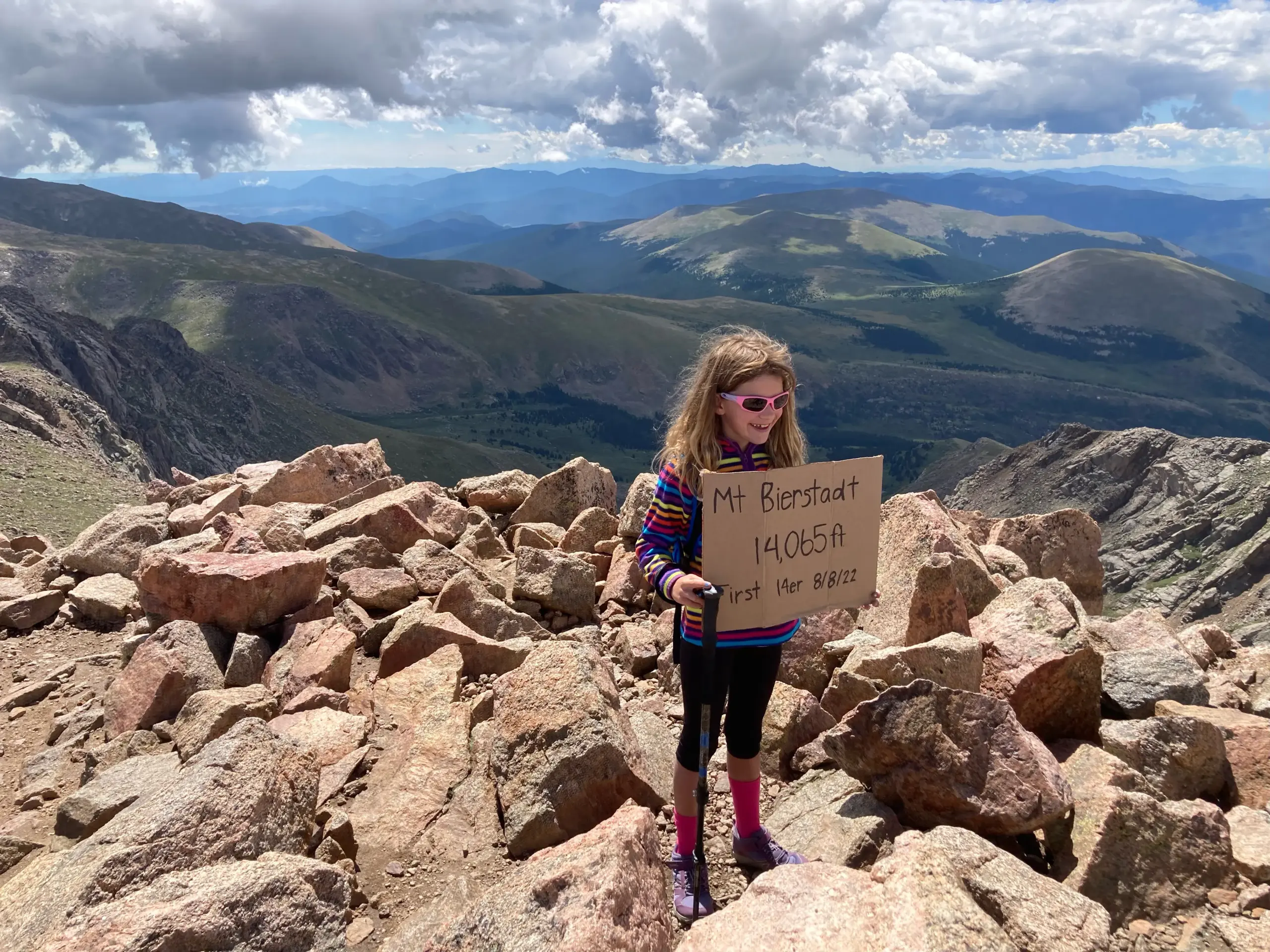
The busiest 14er last year was Mount Bierstadt with an estimated 31,000 hiker-use days, followed closely by Quandary Peak at 30,500. Both totals were up compared to 2024 when those peaks saw visitation in the 25,000 to 30,000 use days range. Mount Democrat on the Decalibron Loop came in third with an estimated 20,000 to 25,000 hiking-use days, up more than 5,000 over 2024, CFI said.
The Front Range and mountains nearby once again proved the most popular places to hike 14ers with 152,400 hiker-use days (59%) spent on the 12 peaks closest to the metro area. Use increased 5.6% compared to 2024 on those 14ers, which include Longs Peak, Pikes Peak, Torreys Peak, Grays Peak, Mount Bierstadt, Quandary Peak, Mount Elbert, Mount Lincoln, Mount Bross, Mount Democrat, Mount Sherman, and Mount Blue Sky. The remaining 46 peaks accounted for 103,600 hiker days last year, the report said.
Read more Travel booking company to lay off nearly 40% of its Denver-based workforce, citing AI changes
Several ranges saw notable declines in visitation compared to 2024, including the San Juan Mountains (down 30%) and the Elk Mountains (down 17%). Conversely, the Sangre de Cristo Mountains saw a 65% boost in visitation compared to the year prior.
Given these ranges are among the least traveled, Athearn said swings in visitation can appear quite large on a percentage basis. Most of the 14ers in those areas saw just 1,000 to 3,000 hiker-use days, while a few of the more well-known peaks like Mount Sneffels and Humboldt Peak saw between 3,000 and 5,000. (Now you know where to beat the crowds.)
One reason CFI believes the Sangre de Cristo Mountains saw more hiking is that 2025 marked the first time since 2021 people could access Mount Lindsey, which was previously closed due to landowner liability concerns.
Despite historically low visitation, the statewide economic impact of hiking Colorado fourteeners in 2025 was $69.4 million, based on historic fourteener hiking-use expenditure studies, CFI said.
CFI uses several metrics to compile its annual fourteener visitation report. On some peaks, there are automated counters along trails. It also employs other data sources and mathematical models to extrapolate its estimates.
Subscribe to our weekly newsletter, The Adventurist, to get outdoors news sent straight to your inbox.