





Think you know Colorado? As we celebrate its sesquicentennial, we’re dusting off some lesser-known nuggets about the Centennial State. File these 15 facts under “Things even longtime Coloradans might not know.” Then keep them in your back pocket for the next time Colorado comes up in trivia.
Read more Classic Trains, Vintage Planes…and One Really Fast Car
Denver was the first city to turn down the Olympics
After being selected to host the 1976 Winter Games, Denver made history when it became the first ever city to reject the Olympics. On May 12, 1970, the International Olympic Committee (IOC) chose Denver over bids from Sion, Switzerland; Tampere, Finland; and Vancouver, Canada. The Mile High City’s Olympic plans were ambitious: Alpine events were slated for Loveland Basin and Mt. Sniktau, located on Loveland Pass outside of Dillon, while Denver Mountain Parks would host Nordic competitions, bobsled and luge races. Tthe Denver Coliseum was set for figure skating and hockey.
But the Games never made it out of the starting gate in Denver as concerns over funding and costs snowballed, and by late 1972 organizers told the IOC that Denver couldn’t host. The Winter Olympics were reassigned to Innsbruck, Austria, which had already hosted the Games in 1964 and had the infrastructure in place.
Even still, Colorado has strong ties to the Olympics as Colorado Springs is home to the Colorado Springs Olympic & Paralympic Training Center and the U.S. Olympic & Paralympic Museum.
Colorado lit the way on legal cannabis
California was a pioneer in legalizing medical marijuana back in 1996. Several states, Colorado among them, followed suit. But in 2014, we became the first to legalize recreational marijuana.
At the University of Colorado, the Business Research Division at Leeds School of Business maintains a dashboard for Colorado’s Marijuana Enforcement Division that tracks a number of metrics, including sales. In 2021, marijuana sales topped $2.2 billion, but it looks like the green rush has slowed some in recent years with sales registering at $1.3 billion in 2025.
Our mountain communities are also high (in elevation)
Alma stakes its claim as the highest incorporated town in North America, perched at 10,578 feet. Meanwhile, Leadville is the highest incorporated city in North America, soaring at 10,430 feet. Curious how Leadville got its name? The city’s founding fathers were looking for an alternative because there were too many places with “silver” in the name at the time.
Colorado’s Sand Dunes reach surprising heights
Colorado may be known for its mountains, but our state’s Sand Dunes are pretty impressive, too. Great Sand Dunes National Park, located in southern Colorado near Alamosa in the San Luis Valley, is home to the tallest dunes in North America, according to the National Park Service. Star Dune soars 750 feet from its base to its crest. The park’s High Dune rises 699 feet, but because it starts on higher ground it actually rises higher above sea level than Star.
Dinger’s story has a prehistoric backstory
Ever wonder why the Rockies mascot is a purple triceratops? When construction crews were excavating Coors Field, they unearthed a dinosaur fossil near home plate. When Dinger was introduced to fans, he hatched out of a giant dino egg on April 16, 1994.
Pikes Peak inspired ‘America the Beautiful’
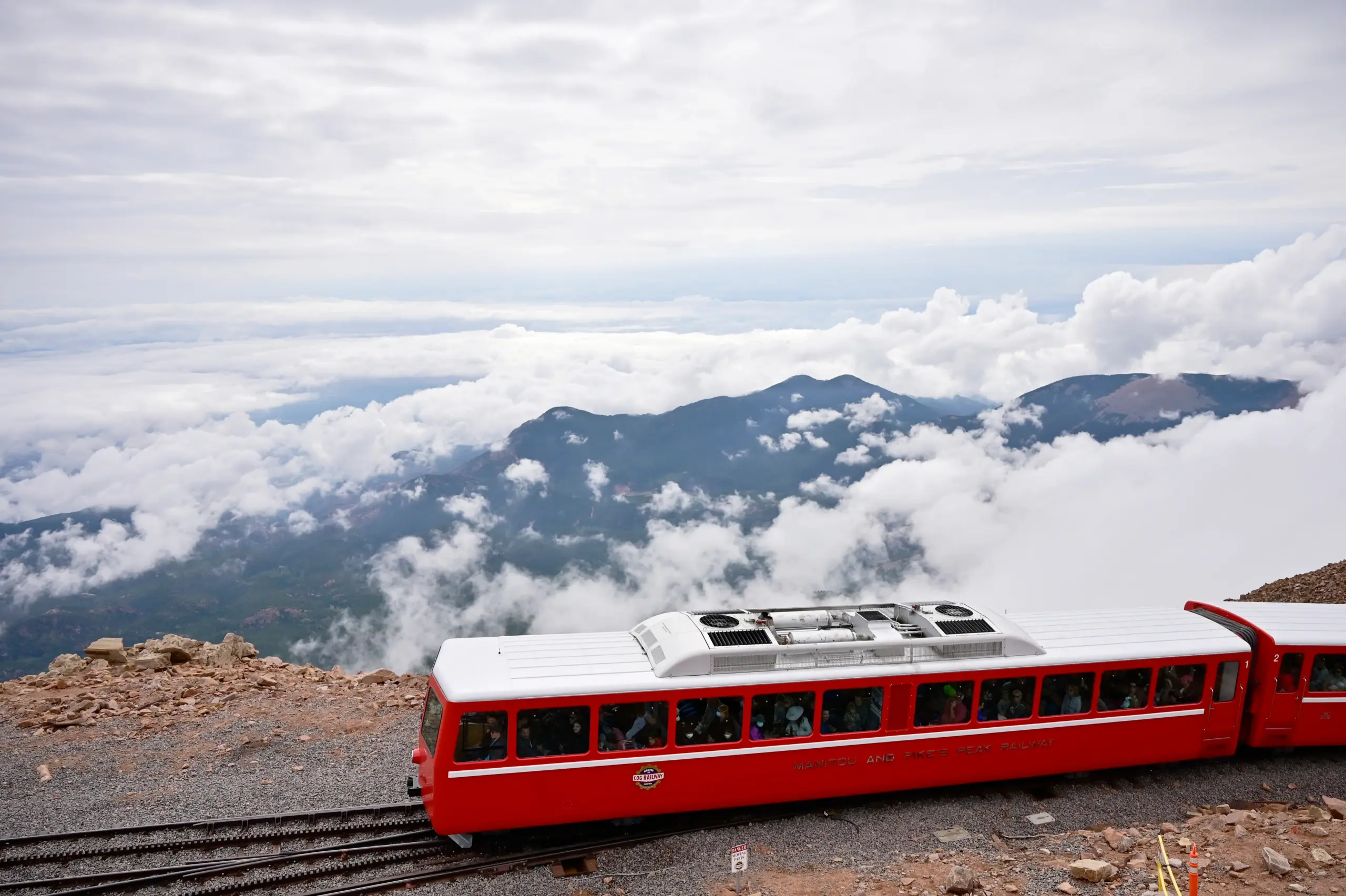
The summit of Pikes Peak inspired Katharine Lee Bates to write “America the Beautiful.” Locals and visitors can take The Broadmoor Manitou and Pikes Peak Cog Railway to the summit of the peak for those same awe-inspiring views.
You may do better at a Colorado driving range than one out of state
Home turf advantage? Golf balls fly on average 10% farther in Colorado than they do in other states. Chalk it up to the altitude. If you’re playing at a mountain course, you may notice your ball goes even farther when you tee off, thanks to the higher altitudes.
150 things that make Colorado quintessentially cool
Burlington’s antique carousel is a rare piece of Americana
Originally built in 1905 for Denver’s Elitch Gardens, a hand-carved wooden carousel migrated to its new home in Burlington in 1928, when the amusement park upgraded to a newer model with “jumping” animals that moved up and down. Kit Carson County snapped up the classic for $1,200, preserving a rare piece of Americana. It’s the only antique carousel in America still having original paint on both the scenery panels and on the animals. The Kit Carson County Carousel is open from Memorial Day through Labor Day.
Read more Today in History: August 1, University of Texas at Austin tower sniper kills 14
Boulder came close to becoming a prison town
Boulder is known today as an idyllic college town, with the University of Colorado deeply woven into the city’s identity. But the city could have taken a very different path.
In the late 1870s, Boulder leaders lobbied state lawmakers to make the city home to a university, competing with Cañon City for Colorado’s flagship school. There was a twist: The losing city would receive a consolation prize: a new state prison.
Visitors can explore this alternate-history scenario at the Museum of Boulder, where an interactive exhibit imagines how the city might look if history had unfolded differently. Onscreen, CU’s familiar red-tile roofs and campus buildings are replaced with barbed-wire fences and stark concrete structures spread across the foothills.
Today, Cañon City is home to the Colorado State Penitentiary and several other correctional facilities, along with the Museum of Colorado Prisons.
Colorado’s first skiers were mail carriers, not powder chasers
Long before Colorado became a ski destination, skiing here was all about getting the mail delivered. In the late 1800s, more than 50 mail carriers traversed snowy mountain terrain on homemade wooden skis secured with simple toe straps. These rugged couriers battled whiteout conditions, avalanches and brutal winter weather to reach remote communities. Today, visitors can learn about these early ski pioneers at the Colorado Snowsports Museum and Hall of Fame in Vail.
The state capitol has a mile-high marker
Want proof you’re exactly a mile above sea level? Head to the west steps of the Colorado State Capitol. A marker on the 15th step designates the famed 5,280-foot elevation. You can also find a row of purple seats at Coors Field that denote exactly 5,280 feet, and The Mile High Loop at City Park follows a 5k route along the city’s mile-high contour line.
The cheeseburger has a meaty history in Denver
The origins of the cheeseburger are up for debate, with California and Kentucky both staking claims. But in the battle of the burgers, Denver has bragging rights: Louis Ballast, owner of the Humpty Dumpty Drive-In, secured a trademark for the word “cheeseburger” in 1935, according to Visit Denver. A commemorative marker now stands near the site of the former restaurant at Speer Boulevard and Alcott Street, paying tribute to Colorado’s slice of burger history. Legend has it that before Ballast experimented with topping burgers with cheese, he tried chocolate and peanut butter, but those accouterments didn’t win over taste-testers.
From Jolly Ranchers and cheeseburgers to teddy bears and tampons, these inventions were created in Colorado
Colorado has superior hot springs
Glenwood Springs is home to the world’s largest natural hot springs pool, where more than one million gallons of mineral-rich water fill the Grand Pool, which stretches more than two blocks long. Meanwhile, Pagosa Springs claims another geothermal distinction: the Guinness World Records-certified deepest geothermal hot spring aquifer in the world. The town’s Mother Spring extends more than 1,002 feet underground.
Aspen miners once unearthed a record-breaking treasure
Colorado’s mining history is filled with big discoveries, but Aspen delivered one that was especially massive. In 1894, miners pulled the world’s largest silver nugget from Aspen’s Smuggler Mine. The colossal chunk weighed in at a staggering 2,350 pounds, according to the Aspen Chamber Resort Association.
Fort Collins helped inspire Disneyland’s Main Street
Take a stroll through Old Town Fort Collins and you may experience a little déjà vu, especially if you’re a Disney fan. Disneyland’s iconic Main Street U.S.A. was inspired by Fort Collins’ historic downtown district. Before Disneyland was built, Walt Disney enlisted Hollywood art director Harper Goff to help design the park. Goff grew up in Fort Collins, and when he sketched concepts for Main Street, he drew from childhood memories of familiar local buildings, including the city hall, the Old Linden Hotel, Old Firehouse Books and other local storefronts.
Colorado’s Capitol is home to a one-of-a-kind stone
Inside the Colorado State Capitol, turn your attention to the pink-hued, marble-like stone that makes up wainscotting and column plinths. Known as Colorado rose onyx, the ultra-rare material was discovered near Beulah in southern Colorado in 1893. Despite being called “Beulah red marble” it’s actually metamorphosed limestone colored by iron oxide. The Colorado State Capitol used up the entire known supply during construction. A reserve stash is kept in underground vaults and only rarely tapped for restoration work.
Brittany Anas is a Denver-based freelance writer.
Get more Colorado news by signing up for our daily Your Morning Dozen email newsletter.